

Every time I take my car to the shop for an oil change, I ask the mechanic to inspect the brake pads. Since driving habits and road conditions vary from person to person, the wear on brake pads can differ greatly. I once had a friend who bought a new car, drove it for two years, and covered more than 100,000 kilometers. His brake pads, at a glance, still had about 5,000 kilometers left in them. This shows that the lifespan of brake pads is closely linked to how a driver operates the vehicle.
For vehicles that have traveled over 100,000 kilometers, a common issue after replacing brake pads is the presence of noise when braking-or even when not braking, as the pads make a scraping sound. But why does this happen?
Take today's car as an example. It has logged 150,000 kilometers, and when replacing its brake pads, certain factors must be considered. Over time, the brake rotor will develop deep grooves, and the inner and outer edges of the rotor will form a raised lip or ridge. This occurs because the brake pad doesn't perfectly line up with the outer edge of the rotor, leaving a gap of about 1mm.
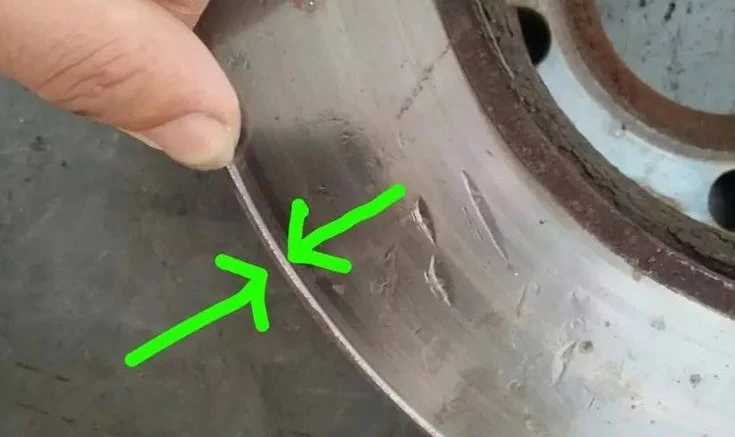
If the new brake pads are installed without modification, two issues may arise. First, the edges of the brake pad may come into contact with the raised lip on the rotor, causing the scraping sound. Second, this problem is particularly common with aftermarket or non-branded brake pads. I've seen cases where brake pads purchased from an auto parts market were too wide, and when installed, they didn't make proper contact with the rotor. The edges of the pads pressed against the ridges of the rotor, but the center didn't touch at all, leading to ineffective braking.
Our experienced mechanics use an angle grinder to trim the edges of the new brake pads, grinding them into a bevel. This adjustment ensures the pads fit properly with the worn rotor, making full and even contact. Depending on how deeply worn the rotor is, the pads are ground down to match the height of the ridge. This is why, when the mechanic notices significant rotor wear, they take the pads outside and grind them down with an angle grinder.
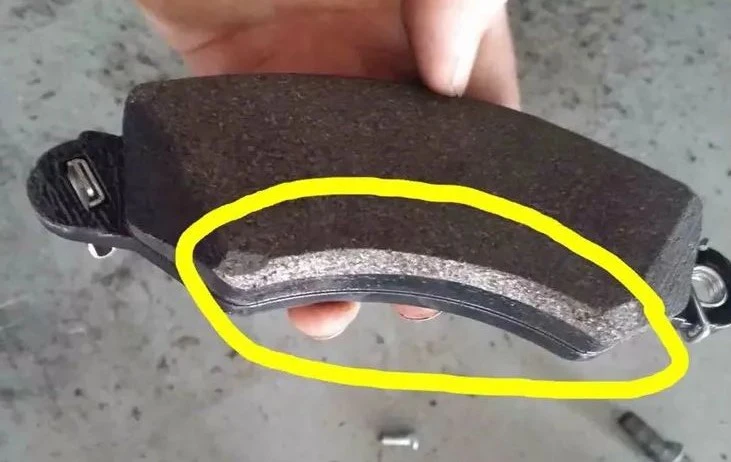
Some might argue that after several thousand kilometers, the pads will still come into contact with the rotor's ridge. While this is true, the grinding process reduces the friction enough to prevent the annoying scraping sound.
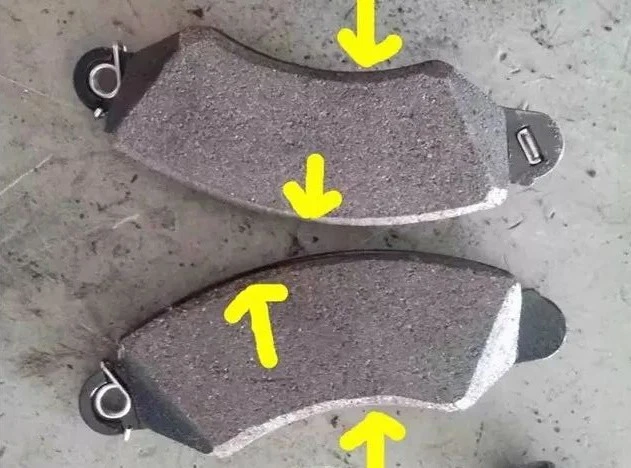
In conclusion, grinding the brake pads with an angle grinder isn't just a random practice. It's a thoughtful process used by experienced mechanics to ensure a perfect fit between the pads and the worn rotor, improving both the effectiveness of the braking system and the overall driving experience.