

Bester High-End Brake Pads: Premium Braking Solutions for Critical Cost-Effective Needs
Experience the precision and durability of our BST Brake Pads, crafted with advanced ceramic or semi-metallic compounds for enhanced braking performance. These pads are designed to reduce noise and dust, ensuring a quiet and clean drive. They stand up to the heat of high-speed braking, providing consistent stopping power in various conditions. For a tranquil and secure braking experience, trust BST Brake Pads to deliver reliability and control.
Why choose us?
Cover more models
We offer an extensive range of ceramic brake pads tailored to fit all models of Japanese, Korean, German, and American cars, providing our customers with a broad selection for any vehicle.
Small MOQ
Our minimum order quantity is only 1 set, providing you with great flexibility to meet your diverse needs for brake pads.
Quality assurance
A full set of quality testing equipment will allow us to repeatedly test and obtain data after production is completed to check product quality.
Fast delivery
We understand that fast shipping is very important to customers, so the models we have in stock only take 3 days.
Supply chain
Establish an integrated supply chain, production chain, and transportation chain. The best solution will be provided by Shandong Best Auto Parts.
Aftersales service
Act quickly on customer feedback to resolve any issues you may have after your purchase.
-
![Auto Ceramic Brake Pads]() Auto Ceramic Brake PadsBrake Pad Set 04465-42140. Location:Front Axle. Brake System:Advics. Width:146.3 mm. Height:56.8 mm. Thickness:17.6 mm.read more
Auto Ceramic Brake PadsBrake Pad Set 04465-42140. Location:Front Axle. Brake System:Advics. Width:146.3 mm. Height:56.8 mm. Thickness:17.6 mm.read more -
![Carbon Fiber Ceramic Brake Pads]() Carbon Fiber Ceramic Brake PadsRake Pad Set 34 21 6 768 471. Location: Rear Axle. Brake System: ATE. Width: 139.7 mm. Height: 67.9 mm. Thickness: 17.3 mm.read more
Carbon Fiber Ceramic Brake PadsRake Pad Set 34 21 6 768 471. Location: Rear Axle. Brake System: ATE. Width: 139.7 mm. Height: 67.9 mm. Thickness: 17.3 mm.read more -
![Carbon Metallic Disc Brake Pads]() Carbon Metallic Disc Brake PadsBrake Pad Set 000 420 59 00. Location: Rear Axle. Width: 122.4 mm. Height: 70.6 mm. Height 1: 64.5 mm. Thickness: 15.2 mm.read more
Carbon Metallic Disc Brake PadsBrake Pad Set 000 420 59 00. Location: Rear Axle. Width: 122.4 mm. Height: 70.6 mm. Height 1: 64.5 mm. Thickness: 15.2 mm.read more -
![Light Vehicle Brake Pads]() Light Vehicle Brake PadsBrake Pad Set :58101-1FE00. Location:Front Axle. Brake System:Mando. Width:131.5 mm. Height:60.1 mm. Thickness:17.5 mm.read more
Light Vehicle Brake PadsBrake Pad Set :58101-1FE00. Location:Front Axle. Brake System:Mando. Width:131.5 mm. Height:60.1 mm. Thickness:17.5 mm.read more -
![Transit Van Brake Pads]() Transit Van Brake PadsBrake Pad Set 29246. Location:Front Axle. Brake System : KNORR SM7. Width : 244.6mm. Height : 111.7mm. Thickness : 30mm.read more
Transit Van Brake PadsBrake Pad Set 29246. Location:Front Axle. Brake System : KNORR SM7. Width : 244.6mm. Height : 111.7mm. Thickness : 30mm.read more -
![0064203920 D1629 GDB1955]() 0064203920 D1629 GDB1955Brake Pad Set 0074208120Location:Front AxleWidth:193.3 mmHeight:64 mmThickness:19 mmNote:Similar to D1455;D1904read more
0064203920 D1629 GDB1955Brake Pad Set 0074208120Location:Front AxleWidth:193.3 mmHeight:64 mmThickness:19 mmNote:Similar to D1455;D1904read more -
![34116796844 SP1699 D1504 GDB1882]() 34116796844 SP1699 D1504 GDB1882Brake Pad Set 34116775310Location:Front AxleBrake System:ATEWidth:155.1 mmWidth 1:154.6 mmHeight:63.9 mmHeight 1:63.7 mmThickness:19.3 mmThickness 1:20.3 mmread more
34116796844 SP1699 D1504 GDB1882Brake Pad Set 34116775310Location:Front AxleBrake System:ATEWidth:155.1 mmWidth 1:154.6 mmHeight:63.9 mmHeight 1:63.7 mmThickness:19.3 mmThickness 1:20.3 mmread more -
![34212449288 D1473 SP2275 GDB1840]() 34212449288 D1473 SP2275 GDB1840Brake Pad Set 34216796741 Location:Rear AxleBrake System:TRWWidth:106 mmHeight:62.4 mmHeight 1:56 mmThickness:18 mmread more
34212449288 D1473 SP2275 GDB1840Brake Pad Set 34216796741 Location:Rear AxleBrake System:TRWWidth:106 mmHeight:62.4 mmHeight 1:56 mmThickness:18 mmread more -
![34112413079 SP2395 GDB1915 D1443 Brake Pad]() 34112413079 SP2395 GDB1915 D1443 Brake PadBrake Pad Set 34116783554Location:Front AxleWidth:192.5 mmWidth 1:193 mmHeight:95 mmThickness:19 mmread more
34112413079 SP2395 GDB1915 D1443 Brake PadBrake Pad Set 34116783554Location:Front AxleWidth:192.5 mmWidth 1:193 mmHeight:95 mmThickness:19 mmread more -
![044650T010 D1401 SP1454 D2334MH GDB7910 Brake Pad]() 044650T010 D1401 SP1454 D2334MH GDB7910 Brake PadBrake Pad Set 04465-0T010Location:Front AxleWidth:167.6 mmHeight:53.4 mmThickness:17.9 mmread more
044650T010 D1401 SP1454 D2334MH GDB7910 Brake PadBrake Pad Set 04465-0T010Location:Front AxleWidth:167.6 mmHeight:53.4 mmThickness:17.9 mmread more -
![GDB1737 SP2292 D1342 Brake Pad]() GDB1737 SP2292 D1342 Brake PadBrake Pad Set 0054201020Location:Front AxleBrake System:TRWWidth:188 mmHeight:80 mmHeight 1:73 mmThickness:19.2 mmread more
GDB1737 SP2292 D1342 Brake PadBrake Pad Set 0054201020Location:Front AxleBrake System:TRWWidth:188 mmHeight:80 mmHeight 1:73 mmThickness:19.2 mmread more -
![0004200305 D1340 SP2284 D30053H Brake Pad]() 0004200305 D1340 SP2284 D30053H Brake PadBrake Pad Set 0074205520Location:Front AxleBrake System:TRWWidth:146.2 mmHeight:71.5 mmThickness:20.6 mmread more
0004200305 D1340 SP2284 D30053H Brake PadBrake Pad Set 0074205520Location:Front AxleBrake System:TRWWidth:146.2 mmHeight:71.5 mmThickness:20.6 mmread more


A brake pad refers to a piece of friction-generating material that pushes itself on to the rotor or disc of your car, thereby enabling it to slow down and stop. They are manufactured from steel with heavy friction material on one side. Therefore as you push the brake, the brake pads squeeze the brake disc, thereby slowing down the car or stopping it.
Benefits of Brake Pads
Safety first: Prevent accidents
The safety of you, your passengers, and others on the road should always be the utmost priority when driving. Brakes are instrumental in ensuring your vehicle can come to a halt promptly and safely when needed. Well-maintained brakes can significantly reduce stopping distances, especially during emergencies, helping prevent potentially catastrophic accidents.
Cost-effectiveness: Saving money in the long run
Many drivers may hesitate to invest in regular brake pad maintenance, considering it unnecessary. However, the truth is that proper care of your brakes can save you a substantial amount of money in the long run. Ignoring routine brake pad checks can damage other brake components, such as brake rotors and calipers, resulting in costly repairs.
Improved performance: Responsive braking system
Have you ever experienced the frustration of a spongy or unresponsive brake pedal? That’s often a clear indication of deteriorated brake pads. Well-maintained brakes offer a smooth and responsive braking experience, giving you more control over your vehicle.
Responsive braking is not just a matter of convenience but safety. Imagine braking suddenly to avoid a collision. Properly functioning pads can differ between a close call and a devastating accident. So, don’t compromise your vehicle’s braking performance; prioritize regular brake pad maintenance for optimal responsiveness.
Prolonged brake and rotor lifespan
Brake rotors are another critical component that can suffer from neglecting brake pad maintenance. Brake pads provide a protective barrier between the rotors and the calipers, preventing metal-on-metal contact that leads to rotor wear. When the pads wear down excessively, the rotors bear the brunt of the friction, resulting in premature wear and tear.
By keeping the pads of your brakes in good shape, you also extend the life of your brake rotors. This simple step can save you from the hassle and expense of replacing worn-out rotors, which can be labor-intensive.
Fuel efficiency: A lesser-known benefit
Believe it or not, the condition of your brake pads can also affect your vehicle’s fuel efficiency. When brakes are excessively worn, they can create unnecessary drag on the wheels, leading to increased fuel consumption.
Maintaining well-functioning brake pads reduces this drag and allows for smoother wheel rotation, promoting better fuel economy. In today’s rising fuel costs and growing environmental concerns, keeping your pads in good shape can contribute to a more efficient and eco-friendly driving experience.

Semi-metallic
Generally, most brake pads are semi-metallic with 30% to 70% metal such as copper, wood, steel, and wire material. These brake pads are popular for being budget-friendly and efficient. Furthermore, they are sturdy, heat resistant, and more effective than the other variants. Moreover, these brake pads are ideal for high-performance vehicles due to their prompt response.
Ceramic
Ceramic brake pads are usually more expensive than semi-metallic pads and they are famous for their efficient braking and heat absorption. Moreover, in comparison with other type of brake pads, they are cleaner and generate low noise. In addition, ceramic brake pads have better longevity in comparison with semi-metallic pads.
Low-metallic, non-asbestos organic (nao)
The low-metallic NAO option is made with a combination of 10% to 30% steel or copper. It provides better breaking alongside the transfer of heat. Although these brake pads are somewhat noisy, they prevent dust accumulation, so that it cannot lead to a frozen calliper.
Non-asbestos organic
Non-asbestos brake pads are manufactured from organic resources and thus are softer and comparatively less noisy. The latest versions offer rubber and fibreglass options too. Although these pads are beneficial for the brake discs, they wear out quickly. Thus, it is not so helpful for off-road driving.
Today's vehicles are typically equipped with disc brakes. The wheels are connected to brake rotors that turn with the wheel. Brake calipers apply pressure to the rotors when the brakes are applied. A brake pad lies between the rotor and the caliper to reduce the level of friction from metal on metal. Over time, the pads need replacing. When a driver applies the brakes, they may hear a screeching sound, or the vehicle pulls to one sign. These are indications that the pads are worn.
The type of replacement brake pads needed depends on the specific vehicle. Ceramic pads are manufactured for heavier vehicles that include pickups and SUVs. Semi-metallic pads are often used for conventional cars. The specialized pads are created to reduce noise levels and prevent dust contamination.
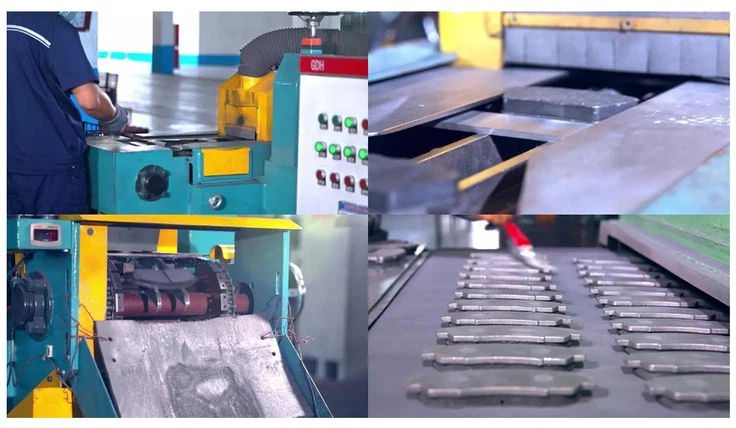
The mixing process
It consists of mixing all the components homogeneously, and therefore it is one of the key steps in the manufacturing process.
To achieve this optimum homogenization of the mixture, the mixer has a central shaft that rotates the components in the shape of 8s and two blender blades on another shaft that homogenize the mixture.
During this process, one of the critical factors is the time that the different materials spend in the mixer, since this period must be specified depending on the type of fibres to be blended. It is important to remember that each fibre has an opening time, i.e. a period when its length is at its maximum. After this time, the fibres are shortened and do not perform the mixing function properly.
Hot pressing
The function of hot pressing is to bind the different components. On the one hand, the pressure applied leads to a reduction in volume, but at the same time the temperature melts the resins so that they flow throughout the material, binding the different elements together.
In this process, pressing cycles are carried out, i.e. the press acts on the pads for a certain period of time and then allows the gases to escape. It is at this stage that the supports stick to the friction material.
There are two main reasons for this:
The support plate is impregnated with a resin that achieves the adhesion of the material.
There are through holes in the brackets, the function of which is to receive the flowing friction material to achieve complete fixation of the friction material to the support plate.
Typical pressing time varies from 5 to 7 minutes depending on the formula used to allow the resins to cure in the press.
Curing
The curing process takes place in ovens whose main task is the complete polymerisation of the resins, thus achieving a perfect compaction of the material, to which must be added the loss of any remaining volatile content.
This process is also carried out according to the time and temperature reached in the different stages. This means that the pads are affected by a cycle of different temperatures, in which they pass through during a given period.
Scorching
In this final phase, the friction material is subjected to temperatures of 650ºC or higher by means of a hot plate. In this last scorching process, a large part of the remaining organic material is removed, and the brake pad acquires its definitive characteristics.
Components of Brake Pads
The composition of the brake pads, generally composed of steel plate, adhesive insulation layer and friction block, which is composed of non-heat transfer material, the purpose of insulation. Friction block from the friction material, adhesive composition, the brake was squeezed in the brake disc or brake drum on the friction, so as to achieve the purpose of vehicle braking. Due to friction, the friction block will gradually be worn, in general, the lower the cost of the brake pads wear faster. After the use of friction material to replace the brake pads, or steel plate and brake disc will be in direct contact, and ultimately lose the braking effect and damage the brake disc.
Invest in quality brake pads
Put simply, you get what you pay for. Brake pads play an integral role in stopping your vehicle and because braking is a commonly performed action, investing in quality brake pads will ensure your safety and longer duration between replacement brake pads.
Your vehicle maintenance technician will be able to recommend the best brake pads for your particular make and model.
Coast before using your brake pedal
Coasting is a driving technique that involves taking your foot off the accelerator and letting your vehicle slow down naturally before applying the brakes. Since braking at higher speeds causes more wear on your brake pads, it benefits your car (and your brake pads) to allow your vehicle to slow down before using your brakes.
Lighten your load
The heavier your vehicle, the harder it is on your brakes to stop your vehicle. Consider keeping only the essentials in your vehicle to avoid any unnecessary weight, and be aware of the weight of any modifications or aftermarket equipment you install to avoid premature wear on your brake pads.
Avoid heavy or sudden braking
Drivers who slam on their brakes or suddenly brake frequently will have to replace their brake pads more often than those who practice coasting or allow for enough space to gradually brake. We’ve all encountered tailgaters and people who approach the rear of our vehicles too quickly.
Be mindful of the space between you and other vehicles, and your brake pads will last longer.
Flush your brake fluid regularly
Flushing your brake fluid regularly every two years or 25,000 miles will help your brakes and brake pads last longer. Because added moisture naturally occurs over time, it can lead to internal corrosion, causing a braking system failure.

There's a lot more to effectively using your car's braking system than simply stomping on the pedal when a squirrel darts out in front of you. The braking systems of cars, trucks and motorcycles are made up of a number of parts that translate the driver's actions into physical force that stops the car. One of those brake parts is your vehicle's brake pads.
Brake pads are a key brake part because they are the component that contacts and applies pressure and friction to a vehicle's brake rotors -- those flat, shiny discs that you can sometimes see just behind the wheels of some vehicles. The pressure and friction applied to the brake rotor is what slows and stops the wheel. Once the wheels stop turning, the vehicle stops moving, too. Though the role of brake pads as braking parts is pretty simple, the brake pads themselves are anything but.
How to Choose the Right Brake Pads
● The material of brake pads significantly affects their performance and suitability. Ceramic pads are durable and quiet but expensive, metallic pads offer high stopping power but are noisy, and semi-metallic pads provide a balance between durability and noise. The choice depends on your driving style and frequency of braking.
● Different brake pads are recommended for different driving conditions. Ceramic pads are ideal for conservative and highway driving, semi-metallic pads are suitable for aggressive and mountainous/towing driving, and organic pads are best for city driving.
● Brake pads should be compatible with your car model for optimal performance and safety. Noise level is also a crucial factor to consider for a comfortable driving experience, with ceramic and organic pads typically being the quieter options.
● Checking the warranty on brake pads before purchase can save you money and hassle. Warranties generally range from 12,000 to 50,000 miles, but policies vary by company, so it's important to read and understand the terms thoroughly.
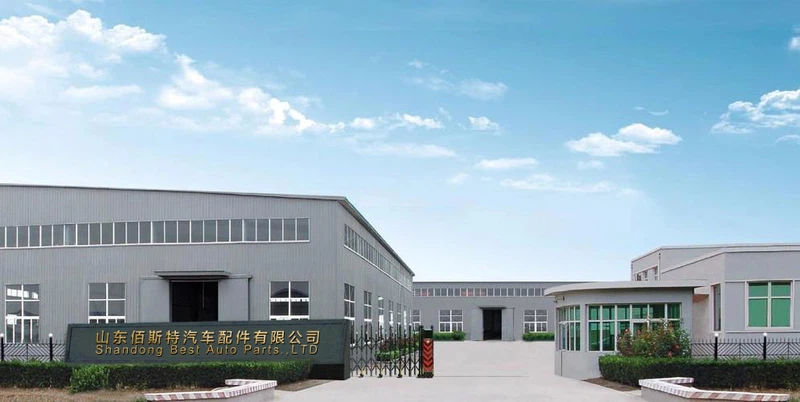
Our Factory
Shandong Best Auto Parts Co., Ltd. is a brake pad manufacturer located in Shandong, China. The factory was established in 2015. We focus on the production of car brake pads, brake shoes and truck brake pads, brake lining. As an OEM brake pad and brake shoe manufacturer and supplier, we currently have more than 3,000 models of production molds and maintain more than 2,000 models in stock, we have been committed to providing high-quality and reliable products. Our formulas are asbestos-free, dust-free, noise-free, and have long service life, and are trusted by customers. At the same time, we are also actively exploring the market. Our team is full of professional knowledge and experience, and we will provide high-quality after-sales service and will do our best to meet customer needs.

FAQ
We're well-known as one of the leading brake pads manufacturers and suppliers in China. Please rest assured to buy cheap brake pads for sale here from our factory. For price consultation, contact us.
brake pad nuts, brake pad installation, brake pad fault indicator