

High-Performance Brake Linings | Precision Friction Material for Automotive & Industrial Braking Systems
Maximize the longevity and efficiency of your braking system with BST Brake Lining. Our lining is constructed from top-tier materials, offering superior heat and wear resistance for sustained performance. Easy to install and compatible with a variety of commercial vehicles, it's the smart choice for professionals who won't settle for less. Depend on our lining for robust braking capabilities that stand the test of time.
Why choose us?
Cover more models
We offer an extensive range of ceramic brake pads tailored to fit all models of Japanese, Korean, German, and American cars, providing our customers with a broad selection for any vehicle.
Small MOQ
Our minimum order quantity is only 1 set, providing you with great flexibility to meet your diverse needs for brake pads.
Quality assurance
A full set of quality testing equipment will allow us to repeatedly test and obtain data after production is completed to check product quality.
Fast delivery
We understand that fast shipping is very important to customers, so the models we have in stock only take 3 days.
Supply chain
Establish an integrated supply chain, production chain, and transportation chain. The best solution will be provided by Shandong Best Auto Parts.
Aftersales service
Act quickly on customer feedback to resolve any issues you may have after your purchase.
-
![Brake Lining Set]() Brake Lining SetBrake Lining Kit 3057001300. Rear Axle. Drum Diameter : 420 mm. Width : 200 mm. Thickness : 17/10.09 mm. Outer Length : 219 mm. Inner Length : 202 mm. Radius : 205 mm. Number of holes : 10.read more
Brake Lining SetBrake Lining Kit 3057001300. Rear Axle. Drum Diameter : 420 mm. Width : 200 mm. Thickness : 17/10.09 mm. Outer Length : 219 mm. Inner Length : 202 mm. Radius : 205 mm. Number of holes : 10.read more -
![Trailer Brake Lining]() Trailer Brake LiningICER Brake Lining Kit 21 9495 00. Front Axle, Rear Axle. Drum Diameter : 410mm. Width : 183 mm. Thickness : 17/11.8 mm. Outer Length : 192 mm. Inner Length : 178 mm. Radius : 200 mm. Number of holesread more
Trailer Brake LiningICER Brake Lining Kit 21 9495 00. Front Axle, Rear Axle. Drum Diameter : 410mm. Width : 183 mm. Thickness : 17/11.8 mm. Outer Length : 192 mm. Inner Length : 178 mm. Radius : 200 mm. Number of holesread more -
![Heavy Truck Brake Linings]() Heavy Truck Brake LiningsBrake Lining Kit 3057001300. Rear Axle. Drum Diameter : 420 mm. Width : 200 mm. Thickness : 17/10.09 mm. Outer Length : 219 mm. Inner Length : 202 mm. Radius : 205 mm. Number of holes : 10.read more
Heavy Truck Brake LiningsBrake Lining Kit 3057001300. Rear Axle. Drum Diameter : 420 mm. Width : 200 mm. Thickness : 17/10.09 mm. Outer Length : 219 mm. Inner Length : 202 mm. Radius : 205 mm. Number of holes : 10.read more -
![Front Brake Lining]() Front Brake LiningBrake Lining Kit 551137. Front Axle. Drum Diameter : 413 mm. Width : 178 mm. Thickness : 19.1 mm. Outer Length : 259 mm. Inner Length : 235 mm. Radius : 187 mm. Number of holes : 16.read more
Front Brake LiningBrake Lining Kit 551137. Front Axle. Drum Diameter : 413 mm. Width : 178 mm. Thickness : 19.1 mm. Outer Length : 259 mm. Inner Length : 235 mm. Radius : 187 mm. Number of holes : 16.read more


Brake linings are disposable friction materials attached to brake shoes or pads in a vehicle’s braking system. When the brakes are applied, these linings press against the metal discs (rotors) or drums, creating friction. This friction converts the car’s motion energy (kinetic energy) into heat energy, which is what ultimately slows down or stops the vehicle. Brake linings protect the underlying metal components from wear and tear caused by the heat and friction generated during braking. They are essential parts of both disc and drum brake systems, used in everything from everyday cars to heavy-duty trucks.
Benefits of Brake Lining
High friction coefficient
Brake linings are designed to provide a high friction coefficient, which means they can generate significant friction against the brake drums or rotors when the brakes are applied. This results in efficient and effective braking, allowing for shorter stopping distances and improved safety.
Heat resistance
Brake linings are engineered to withstand high temperatures generated during braking. They have excellent heat dissipation properties, which helps prevent brake fade and maintain consistent braking performance even under heavy use or during prolonged braking.
Noise reduction
Brake linings often incorporate noise reduction features, such as chamfers, slots, or shims, to minimize brake squeal and noise. This helps improve the comfort and overall driving experience for vehicle occupants and reduces noise pollution in residential areas.
Longevity
Brake linings are designed to be durable and long-lasting. They are engineered to withstand the wear and tear associated with braking, providing extended service life and reducing the need for frequent replacements. This helps lower maintenance costs and downtime for vehicle owners.
Compatibility
Brake linings are available in various formulations and designs to suit different types of braking systems and vehicle applications. They can be tailored to meet the specific requirements of passenger cars, commercial vehicles, motorcycles, or other specialized vehicles, ensuring optimal performance and safety.
Environmental friendliness
Many modern brake linings are designed to be environmentally friendly. They are manufactured using materials that are less harmful to the environment and produce fewer pollutants during braking. This helps reduce the ecological impact of vehicle braking systems.

Non-asbestos brake lining
Non-asbestos is an organic lining that is environmentally friendly and durable. Rubber, glass, various types of resin and even Kevlar are in these brakes. Only a small amount of metal makes up this kind of lining.
Non-asbestos linings are less durable than their counterparts. This kind of brake creates dust when in use but they are not considered pollutants. They are also far quieter than asbestos and semi-metallic brakes.
Semi-metallic brake lining
The second lining material is semi-metallic. This kind of lining was created in the 70s. Many kinds of metals make up semi-metallic brakes. Usually brass, copper, and steel.
These brake linings are durable, cheap and easily maintained. But because of their somewhat metallic construction, they can be loud.
Ceramic friction brake lining
Ceramic friction brake pads are lightweight due to their copper construction. They are efficient at heat dissipation and help reduce metal-to-metal wear.
These pads are common with most high-performance vehicles on the market today. Because of this, they are also the most expensive.
The brake system operates under the principle of friction. In a drum brake system, levers linking the linings to the brake cylinder attach the linings.
When you step on the brake pedal, pressure is generated within the brake cylinder, and pistons are pushed against the brake levers. The force on the brake levers pushes the linings against the inner drum surface. The friction generated by the pushing force resists the rolling motion of machines or vehicles and brings it to a stop.
If your vehicle has a disc brake, the linings are mounted on calipers and are surrounded by a rotor. When you step on the brake pedal, a piston forces the brake pads against the rotor, and friction created stops your moving truck.
Linings also have reverse side damping. These components, usually springs and sheets of metal, reduce the noise during braking.
Brake lining materials are attached to a metal or ceramic backing, similar to the brake shoe, using heat-resistant joints, heat-resistant rivets, or high-tech adhesives. Additionally, brake lining material always has a high coefficient of friction because the kinetic energy required during the braking process is transformed into thermal energy. Therefore, in addition to being rough or textured (friction materials), the materials used to create the materials must be strong and bear high heat and pressure.
A wide range of semi-metallic and non-metallic materials, including aramid fibers, carbon composites, cellulose mineral fibers, ceramics, chopped glass, copper fibers, and steel fibers, may be used by manufacturers to create brake linings. Although they normally operate with standardized compositions, manufacturers may combine friction materials with different compositions and thicknesses.
Due to the health risks asbestos exposure presents, such as the development of lung cancer, other lung diseases, or mesothelioma, friction materials are no longer primarily made of asbestos fibers. Some linings are made of tougher brake materials, but this is only smart if the clutch disks or drums that go with them are also robust and of excellent quality. If they are not, wear and tear could easily occur more quickly. Sometimes using soft, lightweight brake linings is preferable.
No matter the specifics of the lining that creates it, friction is necessary for all braking systems since it is the process that permits machinery and engines to slow down and accelerate efficiently. Therefore, it is crucial to pay attention to a few different things to maintain the braking system connected to a brake line, whether it be an elevator, tractor, car, or any other machine or vehicle.

Regular inspection
Inspect your brake lining at least once every six months or after every 10,000 miles of driving. Look for signs of wear, such as uneven wear patterns or cracks in the lining.
Replace worn brake pads
If you notice that the brake pads are worn down to less than 1/4 inch, it's time to replace them. Worn brake pads can cause damage to the rotors and decrease the effectiveness of your brakes.
Keep the brake system clean
Brake dust and debris can build up on your brake pads and rotors, causing them to wear out faster. Use a wire brush or compressed air to clean your brakes regularly.
Avoid harsh braking
Harsh or sudden braking can cause excessive wear on your brake pads and lining. Try to brake gradually and anticipate stops whenever possible.
Use quality brake pads
Always use high-quality brake pads that are designed for your specific make and model of truck. Cheap or inferior brake pads can wear out quickly and may not provide reliable stopping power.
Follow the manufacturer's recommendations
Follow the maintenance recommendations in your truck's owner's manual. These recommendations may include specific intervals for brake inspection, adjustment, or replacement.
Driving condition
The brake lining material will depend on your driving style and requirements. Buying replacement pads will require you to choose the material they are made of. At this point, you need to determine the severity of the brake need. The best brake linings for your car depend on what you want them to do. Pads contain a sacrificial friction material bonded to a metal pad. Every time you use the brakes, a little bit of that material wears out. How much to wear depends on some factors. For example, sudden braking, and frequent abrupt stops, are the cause of your brake linings to wear out faster. The same goes for driving on dirt roads or other extreme conditions.
Maximum temperature
Good brake linings should be able to work in all weathers, whether dry, wet, muddy, warm, or cold.
Maximum temperature: This is the highest temperature the brake linings can withstand before becoming unsafe. During normal use on the street, the brake linings will usually not see a temperature rise of more than 200C or 392F. However, track days are a different story, with temperatures possibly reaching as high as 1,000F because the brakes are applied more often and more aggressively.
Friction response to temperature
Drivers need to note how much force is applied to the pedal to get the same response during emergency braking compared to normal braking.
The lifespan of brake linings
Brake linings are prone to wear. Do you need to consider how long the brake linings are designed to last? Brake linings can last about 40,000 miles on average, but the range is pretty wide: Typically, their lifespan range from 20,000 to 65,000 miles. Many factors affect the life of your brake pads, from your driving habits to the brake linings material. For example, drive slower and you’ll prolong the life of your brake linings.
Brake linings material
Many drivers wonder “what type of brake linings are better for my car?” The type of materials you use depends in part on What’s the type of vehicle you drive. Do you want to carry the kids around in a pickup truck or SUV? Or are you carrying heavy things on a truck? Brake linings are typically made of one of three different materials: organic, ceramic, and semi-metallic, each with its own distinct characteristics and advantages & disadvantages.
Our Factory
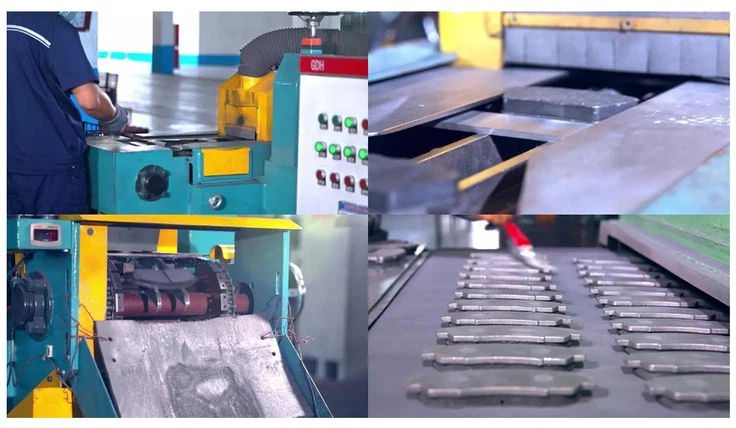
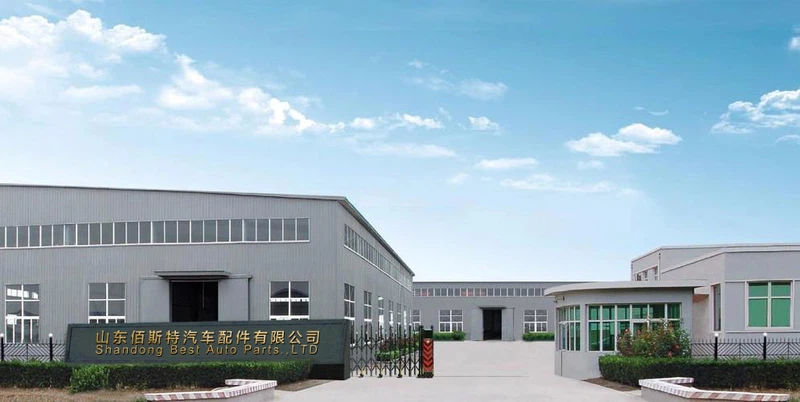
Shandong Best Auto Parts Co., Ltd. is a brake pad manufacturer located in Shandong, China. The factory was established in 2015. We focus on the production of car brake pads, brake shoes and truck brake pads, brake lining. As an OEM brake pad and brake shoe manufacturer and supplier, we currently have more than 3,000 models of production molds and maintain more than 2,000 models in stock, we have been committed to providing high-quality and reliable products. Our formulas are asbestos-free, dust-free, noise-free, and have long service life, and are trusted by customers. At the same time, we are also actively exploring the market. Our team is full of professional knowledge and experience, and we will provide high-quality after-sales service and will do our best to meet customer needs.

FAQ
We're well-known as one of the leading brake lining manufacturers and suppliers in China. Please rest assured to buy cheap brake lining for sale here from our factory. For price consultation, contact us.
brake lining for sport, brake lining supplier, compare brake lining