

Bester Brake Shoes for 1000+ Vehicle Models | Precision Fit for European, US & Asian Cars
For vehicles demanding robust braking power, BST Brake Shoes are your go-to solution. These shoes are built to deliver strong, reliable braking performance, even in the most challenging conditions. Constructed with a high-friction, 100% asbestos-free material, they promise extended service life with minimal maintenance. Whether equipping trucks or buses, our brake shoes exemplify safety and reliability on the road.
Why choose us?
Cover more models
We offer an extensive range of ceramic brake pads tailored to fit all models of Japanese, Korean, German, and American cars, providing our customers with a broad selection for any vehicle.
Small MOQ
Our minimum order quantity is only 1 set, providing you with great flexibility to meet your diverse needs for brake pads.
Quality assurance
A full set of quality testing equipment will allow us to repeatedly test and obtain data after production is completed to check product quality.
Fast delivery
We understand that fast shipping is very important to customers, so the models we have in stock only take 3 days.
Supply chain
Establish an integrated supply chain, production chain, and transportation chain. The best solution will be provided by Shandong Best Auto Parts.
Aftersales service
Act quickly on customer feedback to resolve any issues you may have after your purchase.
-
![Rear Drum Parking Brake Shoes]() Rear Drum Parking Brake ShoesBrake Shoe Set 04495-0K070. Location:Rear Axle. Diameter:295 mm. Width:62 mm.read more
Rear Drum Parking Brake ShoesBrake Shoe Set 04495-0K070. Location:Rear Axle. Diameter:295 mm. Width:62 mm.read more -
![Ceramic Drum Brake Shoes]() Ceramic Drum Brake ShoesThe duo servo type has a structure where a pair of brake shoes is fitted. It is called the primary shoe and secondary shoe. These brake shoes are connected via an adjuster. Powerful pressure from theread more
Ceramic Drum Brake ShoesThe duo servo type has a structure where a pair of brake shoes is fitted. It is called the primary shoe and secondary shoe. These brake shoes are connected via an adjuster. Powerful pressure from theread more -
![Automobile Brake Shoes]() Automobile Brake ShoesThese are Organic brake shoes that are infused with trace amounts of metal such as copper or steel in order to improve braking efficiency and heat dissipation. However, the addition of metal alsoread more
Automobile Brake ShoesThese are Organic brake shoes that are infused with trace amounts of metal such as copper or steel in order to improve braking efficiency and heat dissipation. However, the addition of metal alsoread more -
![Ceramic Drum Brake Shoes]() Ceramic Drum Brake ShoesBrake Shoe Set 58350-1YA00. Location:Rear Axle. Diameter:180 mm. Width:27 mm.read more
Ceramic Drum Brake ShoesBrake Shoe Set 58350-1YA00. Location:Rear Axle. Diameter:180 mm. Width:27 mm.read more -
![Rear Drum Brake Shoe]() Rear Drum Brake ShoeBrake Shoe Set 44060-08G25. Location:Rear Axle. Brake System:Akebono. Diameter:260 mm. Width:50 mm.read more
Rear Drum Brake ShoeBrake Shoe Set 44060-08G25. Location:Rear Axle. Brake System:Akebono. Diameter:260 mm. Width:50 mm.read more -
![Trailer Drum Brake Shoes]() Trailer Drum Brake ShoesBrake Shoe Set 04495-26020. Location:Rear Axle. Brake System:AKEBONO. Diameter:254 mm. Width:58 mm.read more
Trailer Drum Brake ShoesBrake Shoe Set 04495-26020. Location:Rear Axle. Brake System:AKEBONO. Diameter:254 mm. Width:58 mm.read more -
![Automobile Brake Shoes]() Automobile Brake ShoesBrake Shoe Set 04495-35151. Location:Rear Axle. Brake System:AKEBONO. Diameter:295 mm. Width:50 mm.read more
Automobile Brake ShoesBrake Shoe Set 04495-35151. Location:Rear Axle. Brake System:AKEBONO. Diameter:295 mm. Width:50 mm.read more -
![Freight Car Brake Shoes]() Freight Car Brake ShoesBrake Shoe Set 04495-26180. Location:Rear Axle. Diameter:270 mm. Width:58 mm.read more
Freight Car Brake ShoesBrake Shoe Set 04495-26180. Location:Rear Axle. Diameter:270 mm. Width:58 mm.read more -
![Rear Parking Brake Shoes]() Rear Parking Brake ShoesBrake Shoe Set 04495-52020. Location:Rear Axle. Brake System:AKEBONO. Diameter:203 mm. Width:32 mm.read more
Rear Parking Brake ShoesBrake Shoe Set 04495-52020. Location:Rear Axle. Brake System:AKEBONO. Diameter:203 mm. Width:32 mm.read more -
![Rear Disc Parking Brake Shoes]() Rear Disc Parking Brake ShoesBrake Shoe Set 46550-60070. Location:Rear Axle. Diameter:215 mm. Width:45 mm.read more
Rear Disc Parking Brake ShoesBrake Shoe Set 46550-60070. Location:Rear Axle. Diameter:215 mm. Width:45 mm.read more -
![Semi Truck Drum Brake Shoes]() Semi Truck Drum Brake ShoesBrake Shoe Set 97724179. Location:Rear Axle. Diameter:311 mm. Width:122 mm.read more
Semi Truck Drum Brake ShoesBrake Shoe Set 97724179. Location:Rear Axle. Diameter:311 mm. Width:122 mm.read more -
![Heavy Duty Truck Brake Shoes]() Heavy Duty Truck Brake ShoesBrake Shoe Set 5-47110-058-1. Location:Front Axle, Rear Axle. Diameter:320 mm. Width:75 mm.read more
Heavy Duty Truck Brake ShoesBrake Shoe Set 5-47110-058-1. Location:Front Axle, Rear Axle. Diameter:320 mm. Width:75 mm.read more


Brake shoes are a part of a drum brake system. Crescent-shaped, they are lined with a friction-creating material on one side and sit inside the brake drum. When the brake pedal is depressed, it is the role of the brake shoe to push against the inside of the brake drum and help to slow the wheel.
Benefits of Brake Shoes
Longevity
Brake shoes tend to have a longer lifespan than brake pads, making them a cost-effective choice in the long run.
Less prone to overheating
Drum brakes are less susceptible to overheating, which can be a significant advantage in the UAE's scorching temperatures.
Parking brake functionality
Due to their design, drum brakes are often used as parking brakes, adding an extra layer of safety to your vehicle.
Smooth braking
Brake shoes offer a smoother and more gradual braking experience, which can be advantageous in specific driving conditions.

Lined brake shoes
Lined Brake Shoes are made with an inner layer of indented rubber to create a channel-like shape inside the shoe, which channels the friction away from the wheel and away from the brake pad. A similar principle is used to create pads for your brakes. However, unlike the pads that you can fit yourself, Lined Brake Shoes is fitted to the inside of your car boot. This means you do not have to remove your boots to fit them - they are simply a standard part of your car safety kit.
Cushioned brake shoes
This type of Brake Shoes has a padded sole that provides increased friction material between the brake pad and the wheel. Because the sole has a cushioning effect, you feel much more comfortable whilst driving and also do not notice any adverse reaction from the road surfaces. There is no inner padding on the sole of this style of brake shoes. They are available in both straight and curvy fit.
Flexible brake shoes
This style is very similar to the lined brake shoes but incorporates an extra sponge-like rubber inner liner within the sole. The inner material of these shoes is made out of high quality polyurethane, similar to that found in many high end sports shoes, making them highly comfortable to wear. As they are made out of polyurethane, there is no inner padding, so they are prone to 'slippage' where one side of the shoe comes into contact with the wheel whilst you are braking. To solve this problem, the curled brake shoes have a slightly slanted inner side which avoids this contact.
Brake shoes, which can be used with both disc and drum brakes, are found in automotive, railway, cycling and agricultural industries. Widely available, brake shoes are made specific to several applications and specifications with regards to size and material. While originally asbestos was used in nearly every brake system, health hazards related to the substance gave cause to develop and use several other materials in the making of brake shoes. Steel, copper, iron and several alloys with durable and heat resistant qualities are often used in the production of brake shoes.
Ceramic components continue to grow in popularity as well due to their durability, energy absorption and decreased noise production as compared to metal counterparts which emit a grinding noise when worn. Advanced adhesives or rivets are then used to affix the necessary pad or lining. These linings are even more variable including semi-metallic compounds, plastics, mineral fibers, aramid fibers, ceramics, cellulose and even chopped glass fibers. It is important to consider wear rates and performance when selecting a specific friction material for brake systems.
How Brake Shoes Work
The basic process of braking relies heavily on the functionality and efficiency of the brake shoe. When a lever or pedal is pressed, it sets into motion a chain of events beginning with the release of brake fluid which is put under pressure and travels to each braking mechanism where a small hydraulic pump engages the shoe. In the case of drum brakes, the brake shoe extends to apply the pad, lining or block directly to the spinning surface of the wheel. The friction created by contact between the two materials causes the wheel to slow in proportion to the amount of pressure applied.
Removing brake drums
● Jack the vehicle up and remove the wheel. Park the vehicle on a firm, level surface. Use a tire iron or the appropriate socket to loosen the lug nuts on the first rear wheel, then slide a jack beneath one of the vehicle’s rear designated jack points to lift the vehicle up.
● Remove the dust cap with a screwdriver. With the wheel removed, you will be able to see the outside of the brake drum directly behind where the wheel used to be. The center of the circular brake drum is a removable dust cap. Slide a flat head screw driver into the gap beneath the dust cap and pry it toward you to remove it.
● Use a ratchet to unscrew the axle bearing nut. Beneath the dust cover, you’ll find the axle bearing nut. This large nut is usually a 22 or 24 millimeter metric socket, or a 7/8” standard socket. Use a breaker bar or half inch drive ratchet to turn the nut counterclockwise in order to remove it.
● Twist the drum as you pull it backward to remove it. With the axle nut removed, the drum will no longer be held in place, but may still be stuck on due to rust or grime. Twist the drum slightly as you remove it to break it free from any rust.
● Spray the drum with rust remover if it’s stuck. Rust removers like can help loosen the grip created by rust on your vehicle’s drums. Spray it around the outside circumference of the drum where it meets the vehicle and give it a few minutes to set in. Then attempt to remove the drum again.
Pulling out old brake pads
● Use pliers to remove the primary brake shoe springs. The primary brake shoe springs are the large springs located beneath the drum once you remove it. Some vehicles will have one spring for each brake pad, while others may have two. All of the springs will need to be disconnected to relieve the tension and allow you to remove the pads.
● Pull out the brake shoe clips. Use the same needle nose pliers to remove the clips that hold the brake shoe in place. There should be two clips inside the brake system that need to be removed prior to removing the pads themselves.
● Remove the parking brake cable. The parking brake cable will be much easier to remove after the spring tension has been relieved. In some applications, it may be easier to remove the parking brake cable after you’ve pulled the brake shoe set away from the backing plate.
● Pull the brake shoe set free from the backing plate. Grip the brake pads on either side and pull them directly toward you to separate them from the backing plate. The springs will come with the brake shoe set, but the parking brake cable should remain with the vehicle.
Replacing brake pads
● Place the new brake set next to the old one. Lay out the new brake pad set on a table, then place the brake shoe set you just removed from the vehicle down on the table next to it. Be sure there are no other parts on the table that can get mixed up with the components as you transfer them from the old set to the new one.
● Swap components onto the new set. Starting with the springs, remove the components on the brake shoe set you pulled from your vehicle and place them on the new brake pads until the new pads are ready to be installed back into the vehicle.
● Reset the parking brake adjuster. The parking brake adjuster will need to be transferred along with the springs as you transfer the hardware from the old brake set to the new one. Push the adjuster wheel away from the pin as you install it onto the new brakes.
● Hold the brake spring away from the end of the cable. Use a pair of pliers or dikes to pull the parking brake spring away from the end of the cable. This will leave the end of the cable exposed to make it easier to install it back onto the brake assembly.
● Place the shoe set against the backing plate and secure it. Press the brake shoe set with the new brake pads up against the backing plate, then reinstall the brake shoe clips you removed previously to hold the brake set in place.
● Connect the return springs. Reconnect the brake springs you disconnected in order to remove the old brakes. Use a pair of pliers to ensure you don’t pinch or injure yourself in the process. If the springs become too bent or damaged in the process, they will have to be replaced.
● Install the new drum. Remove the new drum from the packaging and compare it to the old drum to ensure they have the same diameter. Place the new drum over the brake shoe set and screw the axle nut on to hold it in place.
How to Maintain Brake Shoes
Brake shoes, also known as brake pads, are subject to wear and tear in the use of consumables. When worn to extreme position, it is necessary to replace, otherwise it will reduce the role of braking, and even form a safety incident.
The brake pad consists of two parts: one is a metal base plate and the other is a friction plate. When braking, the friction lining contacts the brake disc to create friction and act as a brake. Obviously, the friction lining will become thinner and thinner. The friction lining portion of the new brake pad is typically 10 mm, and when the remaining 5 mm is left, it is time to consider replacing the brake bushing. When it is only 2 mm remaining, it is very dangerous and the brake pads must be replaced immediately. Some brake pads hide the metal pin in the friction plate. When the friction lining wears to a certain extent, the metal needle will contact the brake disc, and the brake will make a sharp abnormal sound, reminding you to replace the brake lining.
● When replacing, you need to change the brake pads provided by the original spare parts. Only in this way can the braking effect between the brake pads and the brake discs be the best and the wear is minimal.
● When replacing the shoe, special tools must be used to push the brake cylinder back. Can not be pressed back with other crowbars, which will easily cause the brake caliper guide screws to bend and the brake pads to be stuck.
● After replacing the shoe, be sure to step on the brakes to eliminate the gap between the shoe and the brake disc.
● After the brake shoe is replaced, it is necessary to run for 200 km to achieve the best braking effect. The shoe that has just been changed must be driven with caution.
Compatibility
Depending on the brake drum size, there are different sizes of brake shoes, because of which they differ from one another, this difference may even exist between different models of a car. For this, it is necessary to choose proper brake shoes specific to your vehicle’s make and model. Some brake shoes are vehicle-specific, so finding one that is meant for your vehicle is necessary for a precise fit and function.
Material
There are constant advancements in brake shoe materials development. These advancements result in less operating cost and maintenance, which gives better functionality and overall consumer satisfaction. When it comes to brakes, choosing the right materials is essential. Brake shoes are made from copper, steel, iron, and several other alloys with durable and heat-resistant materials. Brake shoes made from ceramic components are popular because of their durability, energy absorption, and decreased noise while braking. The brake shoes can even include materials like semi-metallic compounds, ceramics, mineral fibers, plastics, aramid fibers, cellulose, and even chopped fiberglass.
Choosing a brand
There are many companies in the market, and each company has unique design and manufacturing processes that determine their reliability and performance. For this reason, it’s tough to select brake shoes that are best for your vehicles. OEM brake shoes are engineered for maximum strength in your specific vehicle.
Checking for fitment
Once brake shoes are replaced, it becomes necessary to check their function for any abnormal sound while braking. It is also necessary to check the wheel cylinder for any brake oil leakages. The brakes should be tested at different speeds to ensure proper stopping. The emergency brake or also known as the hand brake should be checked and set accordingly.
Rust resistance coatings
Due to the brake shoe location, they are always exposed to water and weather conditions which can make them rusty. To avoid the rust problem, many manufacturers apply safety coatings on brake shoes to prevent rust and extend the component’s life. While buying brake shoes you should look for such rust preventive coatings that ensure the brake shoes will last a long time and provide a good service life.
Our Factory
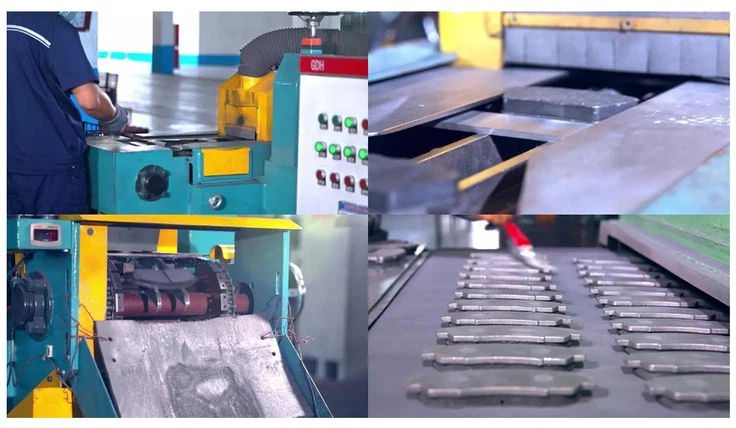
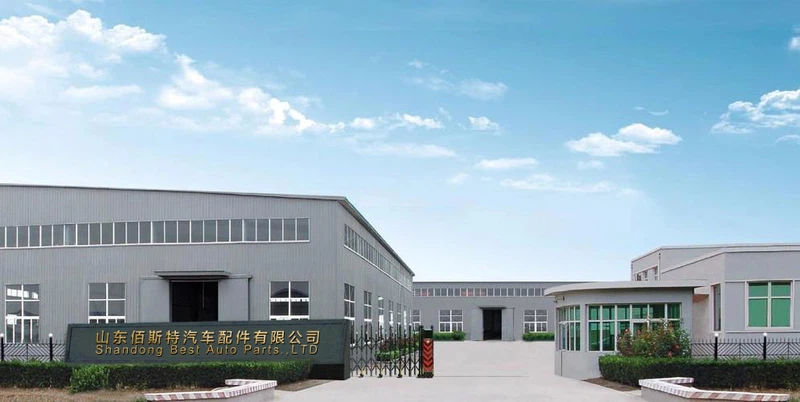
Shandong Best Auto Parts Co., Ltd. is a brake pad manufacturer located in Shandong, China. The factory was established in 2015. We focus on the production of car brake pads, brake shoes and truck brake pads, brake lining. As an OEM brake pad and brake shoe manufacturer and supplier, we currently have more than 3,000 models of production molds and maintain more than 2,000 models in stock, we have been committed to providing high-quality and reliable products. Our formulas are asbestos-free, dust-free, noise-free, and have long service life, and are trusted by customers. At the same time, we are also actively exploring the market. Our team is full of professional knowledge and experience, and we will provide high-quality after-sales service and will do our best to meet customer needs.

FAQ
We're well-known as one of the leading brake shoes manufacturers and suppliers in China. Please rest assured to buy cheap brake shoes for sale here from our factory. For price consultation, contact us.
extending brake shoe life, boosting braking power with brake shoes, reliable brake shoes