


Shandong Best Auto Parts Co., Ltd. is a brake pad manufacturer located in Shandong, China. The factory was established in 2015. We focus on the production of car brake pads, brake shoes and truck brake pads, brake lining.
As an OEM brake pad and brake shoe manufacturer and supplier, we currently have more than 3,000 models of production molds and maintain more than 2,000 models in stock, we have been committed to providing high-quality and reliable products. Our formulas are asbestos-free, dust-free, noise-free, and have long service life, and are trusted by customers. At the same time, we are also actively exploring the market. Our team is full of professional knowledge and experience, and we will provide high-quality after-sales service and will do our best to meet customer needs.
Why choose us?
Cover more models
We offer an extensive range of ceramic brake pads tailored to fit all models of Japanese, Korean, German, and American cars, providing our customers with a broad selection for any vehicle.
Small MOQ
Our minimum order quantity is only 1 set, providing you with great flexibility to meet your diverse needs for brake pads.
Quality assurance
A full set of quality testing equipment will allow us to repeatedly test and obtain data after production is completed to check product quality.
Fast delivery
We understand that fast shipping is very important to customers, so the models we have in stock only take 3 days.
Supply chain
Establish an integrated supply chain, production chain, and transportation chain. The best solution will be provided by Shandong Best Auto Parts.
Aftersales service
Act quickly on customer feedback to resolve any issues you may have after your purchase.

Our rear drum parking brake shoes are designed to offer reliable parking braking performance for vehicles equipped with rear drum brakes. Crafted from high-quality materials and engineered for precise fit and function, these brake shoes ensure consistent engagement and secure holding power, providing drivers with confidence when parking their vehicles. With their durable construction and proven reliability, our rear drum parking brake shoes are the ideal choice for safe and secure parking.

Our rear drum brake shoes are designed to deliver reliable braking performance for rear axle applications. Made from high-quality materials, these brake shoes offer excellent durability and consistent stopping power, ensuring safe and efficient braking for vehicles of all types.

Our trailer drum brake shoes are engineered for reliable performance and durability in trailer brake systems. With their precise fit and high-quality construction, these brake shoes provide consistent stopping power and enhanced safety for trailers of all sizes.
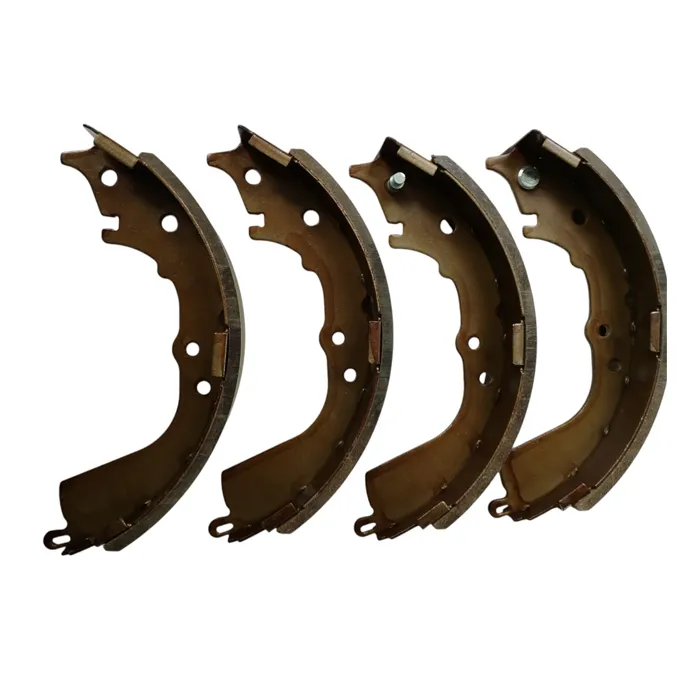
Our freight car brake shoes are engineered for the rigorous demands of freight and cargo transportation. With their robust construction and advanced friction materials, these brake shoes provide reliable stopping power and long-lasting performance, ensuring safe and efficient operation for freight cars and trains.

Our ceramic drum brake shoes are engineered for optimal performance and durability in drum brake systems. With their advanced ceramic friction materials, these brake shoes provide superior stopping power, reduced noise, and enhanced longevity, making them the ideal choice for various automotive applications.

Our rear parking brake shoes are meticulously crafted to provide reliable and secure parking braking performance for vehicles. Designed to meet the specific requirements of rear axle applications, these brake shoes ensure consistent engagement and durability, giving drivers confidence when parking on inclines or uneven surfaces. With their premium materials and precise engineering, our rear parking brake shoes offer superior performance and peace of mind for drivers.
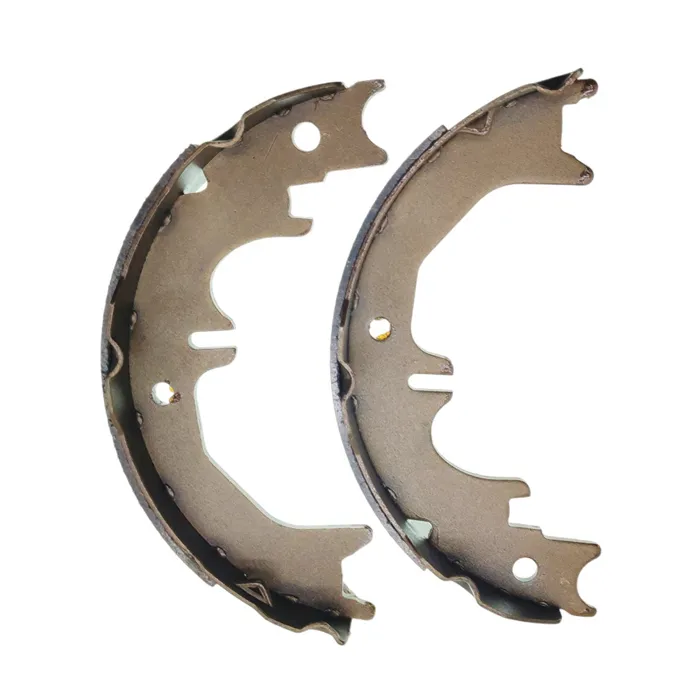
Our rear disc parking brake shoes are engineered to deliver dependable parking braking performance in vehicles equipped with rear disc brakes. Designed for precise fit and compatibility, these brake shoes provide consistent engagement and reliable holding power, ensuring secure parking in various driving conditions. With their advanced friction materials and durable construction, our rear disc parking brake shoes offer long-lasting performance and exceptional reliability.

Our semi-truck drum brake shoes are built to withstand the rigorous demands of heavy-duty trucking. Engineered for optimal performance and durability, these brake shoes provide reliable stopping power and consistent performance in various driving conditions. With their advanced friction materials and robust construction, our semi-truck drum brake shoes offer exceptional reliability and longevity, ensuring safe and efficient operation for commercial fleets.
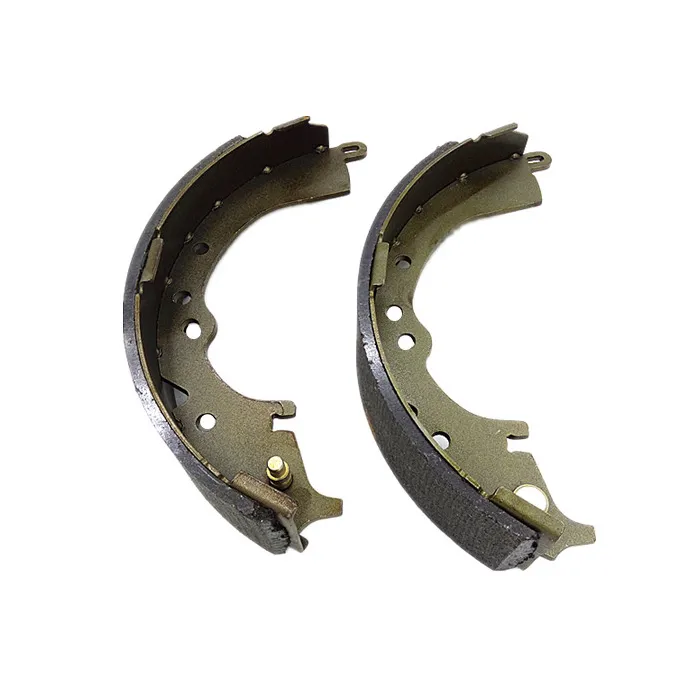
Our handbrake brake shoes are engineered to provide reliable parking braking performance for vehicles equipped with handbrake systems. Designed for precise fit and compatibility, these brake shoes ensure secure engagement and holding power, allowing drivers to park their vehicles with confidence. With their high-quality materials and durable construction, our handbrake brake shoes offer long-lasting performance and dependable operation, ensuring safety and peace of mind for drivers.
The brake shoe is a curved piece of metal with high-friction material (the brake lining) attached to the outside of it. It is attached to the backing plate inside the brake drum with a series of springs and levers, and rests against the hydraulically operated wheel cylinder.
Benefits of Automobile Brake Shoes
Low actuating forces
Brake shoes require relatively low actuating forces to initiate braking. This is due to their internal strengthening, which is measured by the brake coefficient. The coefficient of friction is typically two to five times higher than the required force.
Particle protection
Brake shoes have a closed design that protects the brake shoes against coarser particles. This makes them particularly suitable for off-road vehicles and construction sites where there is a higher risk of encountering debris and dirt.
Reduced rim abrasion
Brake shoes design features reduce the amount of abrasion, such as brake dust, that comes into contact with the rim of the wheel. As a result, the rims stay cleaner and are subjected to less wear and tear.
Durability
Brake shoes are generally more durable than disc brakes. Reccomended maintenance inspections and removing the brake shoes in a double interval, indicating the long-lasting nature of drum brake systems.
Semi metallic brake shoes
Like the name suggests, these types of brake shoes are made of a combination of metallic and organic materials in the ratio of 30:70. These are highly durable, and are among the most commonly used brake shoes. However, they do wear out the rotors faster than their counterparts under extreme braking conditions since the material does not dissipate heat efficiently.
Non asbestos organic brake pads
Commonly known as NAO, these brake shoes are made of organic materials like glass, rubber, fiber or even Kevlar. They are quite soft and do not make as much noise as the metallic brake shoes. However, they do wear out quickly even under nominal conditions and tend to create a lot of brake dust.
Low metallic NAO
These are Organic brake shoes that are infused with trace amounts of metal such as copper or steel in order to improve braking efficiency and heat dissipation. However, the addition of metal also increases the generation of brake dust and noise when braking.
Ceramic brake shoes
Ceramic brake shoes are high end products that are made of ceramic fibers infused in filler materials. These are extremely quiet and produce virtually no dust when compared to the metallic and NAO type brake shoes.
When it comes to driving, safety is of utmost importance. This is why vehicles are equipped with various safety features, including brakes. Brakes play a critical role in ensuring that a vehicle comes to a stop quickly and safely. Among the various components that make up a braking system, one of the most important is the brake shoe.
A brake shoe is a crucial component of a drum brake system. It is the component that presses against the inside of the brake drum to create friction and bring the vehicle to a stop. As the brake pedal is pressed, hydraulic pressure is generated that pushes the brake shoe against the drum. This creates the necessary friction to slow down or stop the vehicle.
Brake shoes are typically made of a strong metal material, such as steel, that can withstand the high temperatures and pressures generated by the braking process. The shoe itself is curved to match the shape of the brake drum and is lined with a heat-resistant material, such as ceramic, to enhance its friction properties.
Over time, the lining of the brake shoe will wear down as it comes into contact with the brake drum. This is a normal part of the braking process and is why brake shoes need to be replaced periodically. If the brake shoe lining wears down too much, it can lead to a loss of braking power and increase the risk of accidents.
When it comes to replacing brake shoes, it is essential to use high-quality parts that are specifically designed for your vehicle. Poor quality brake shoes can cause vibrations, noise, and reduced stopping power, all of which can compromise safety on the road.
It is also important to have your brake shoes inspected regularly as part of routine maintenance. This will help to identify any issues early on, allowing for prompt repairs and replacements as needed. Signs that your brake shoes may be wearing down include squeaking or grinding noises when you apply the brakes, reduced stopping power, and a pulsating sensation in the brake pedal.
In addition to regular inspections and maintenance, there are steps you can take to extend the life of your brake shoes. One of the most important is to avoid "riding" your brakes, which means keeping your foot on the brake pedal for an extended period, such as when driving down a steep hill. This can generate excessive heat and wear down the brake shoe lining prematurely.
Another way to extend the life of your brake shoes is to drive more smoothly and avoid sudden stops. This reduces the amount of friction generated during the braking process, which can help to reduce wear and tear on the brake shoe lining.
Brake shoes are a critical component of a vehicle's braking system, and they play a vital role in ensuring safety on the road. Regular inspections and maintenance, along with the use of high-quality replacement parts, can help to ensure that your brake shoes perform optimally and keep you and your passengers safe. So, if you suspect that your brake shoes may need to be replaced or inspected, be sure to have them checked out by a qualified mechanic as soon as possible.
Regular inspection
When was the last time you checked your brake shoes, rotors, and calipers for any signs of wear and tear? When was the last time you had your fluid flushed or replaced? Regular inspection of your car's braking system is essential if you want to stay safe on the road while driving. Even the smallest sign of wear on your brake pads or rust on your rotors should let you know that it's time to visit professional auto repair services near you. A visual inspection of the braking system can help detect any issues early on and prevent more significant problems down the road.
Change brake shoes regularly
Do you have your car owner's manual? It should state there how often you should change your brake shoes. Most car manufacturers recommend changing them every 20,000 to 40,000 miles. Brake shoes wear out over time due to friction with the rotors. It's important to change them regularly before they wear out completely.
Use quality brake shoes
The quality of the brake shoes that you use can make all the difference. When replacing your brake shoes, ensure that you use high-quality brake shoes that are designed for your car. Cheap brake pads may be tempting, but they can wear out quickly, which can compromise the effectiveness of your brakes and your safety on the road.
Check brake fluid regularly
Your brake fluid transmits the force from the brake pedal to the brake shoes. If your brake fluid level is low, your brakes won't work as well as they used to. You should check the brake fluid level regularly and top it up if it's low. Also, ensure that the brake fluid is clean and free from contaminants.
Bleed the brakes
As time passes, air can get into your car's braking system. This can cause your brakes to become spongy, thus reducing their effectiveness. Bleeding the brakes can help remove air from the system and restore the brakes' efficiency and capacity. You should bleed the brakes every two years or as recommended by the car manufacturer.
Brake shoes are positioned inside the brake drum and are attached to the backing plate using hold down hardware. Each drum brake assembly consists of a leading and a trailing brake shoe, both actuated at the same time through hydraulic pressure applied by the wheel cylinder. When you apply pressure to the brake pedal, hydraulic fluid is placed under pressure and transfers energy to the wheel cylinder. Pressurized brake fluid pushes the wheel cylinder pistons outward, moving the brake shoes into contact with the inner brake drum surfaces. Brake shoe contact with the drum causes friction, resulting in braking action and reduction of speed. The more pressure applied, the greater the braking force and heat generated.
How to Choose the Right Automobile Brake Shoes
Understand your vehicle's specifications
Consult your vehicle's manual or research online to determine the specifications for your car's brake system. This includes the size, type, and material of the brake shoes.
Identify the brake shoe type
There are two main types of brake shoes: drum brake shoes and disc brake pads. Ensure you are selecting the correct type based on your vehicle's braking system.
Consider the material
Brake shoes are commonly made of organic, semi-metallic, or ceramic materials. Each material has its own advantages and disadvantages.
● Organic: Quiet and provide smooth braking but may wear out faster.
● Semi-metallic: Offer good performance in various conditions but may produce more noise and dust.
● Ceramic: Provide excellent performance, durability, and produce less noise and dust, but they can be more expensive.
Check for compatibility
Make sure the brake shoes you are considering are compatible with your specific make and model of the car. Check with your vehicle manufacturer or a trusted automotive parts store.
Consider your driving style
If you engage in heavy braking frequently, such as towing or driving in mountainous terrain, you might want to opt for brake shoes that are designed for high-performance or heavy-duty use.
Look for brand reputation
Choose brake shoes from reputable brands known for producing quality automotive parts. Reading reviews and seeking recommendations can help you identify trustworthy brands.
Compare prices
Prices for brake shoes can vary based on brand, material, and other factors. Compare prices from different retailers and consider the overall value, including warranty and performance.
Check for warranty
Look for brake shoes that come with a warranty. This can provide peace of mind and protection in case of any defects or premature wear.
Consult with a professional mechanic
If you are unsure about which brake shoes to choose, or if you want personalized advice based on your driving habits and vehicle specifications, consult with a professional mechanic.
Follow installation guidelines
Once you have selected the right brake shoes, follow the manufacturer's guidelines for installation. If you are not comfortable doing it yourself, seek the help of a qualified mechanic.
Our Factory
Shandong Best Auto Parts Co., Ltd. is a brake pad manufacturer located in Shandong, China. The factory was established in 2015. We focus on the production of car brake pads, brake shoes and truck brake pads, brake lining. As an OEM brake pad and brake shoe manufacturer and supplier, we currently have more than 3,000 models of production molds and maintain more than 2,000 models in stock, we have been committed to providing high-quality and reliable products. Our formulas are asbestos-free, dust-free, noise-free, and have long service life, and are trusted by customers. At the same time, we are also actively exploring the market. Our team is full of professional knowledge and experience, and we will provide high-quality after-sales service and will do our best to meet customer needs.


FAQ
Hot Tags: automobile brake shoes, China automobile brake shoes manufacturers, suppliers, factory, sale brake shoes, refurbished brake shoes, green brake shoes, ceramic brake shoes, sourcing brake shoes, offline brake shoe order


