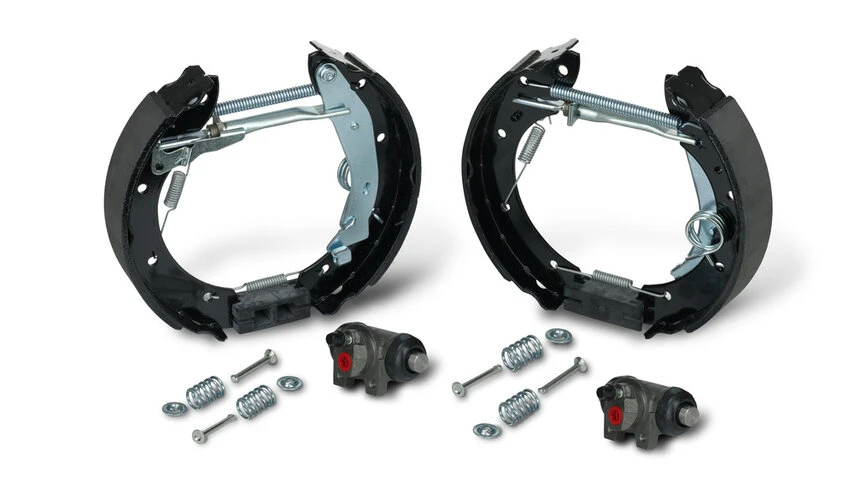
The coefficient of friction of brake pads is a critical parameter that measures their frictional effectiveness, and it plays a significant role in assessing brake performance. This coefficient essentially reflects how well the brake pads can create friction against the brake disc, which in turn influences braking efficiency. Here's a closer look at what the coefficient of friction means, how it varies, and its impact on braking performance.
What is Coefficient of Friction?
The coefficient of friction is a numerical value that represents the amount of frictional force generated between two surfaces in contact. For brake pads, this value indicates how effectively they can convert kinetic energy into heat and friction to slow down or stop the vehicle. For instance, if a force equal to the weight of a 100kg object is applied to move it on a horizontal surface, and this force matches the frictional force needed to overcome its movement, the coefficient of friction would be 1.
How Does Coefficient of Friction Affect Braking?
Higher Coefficient of Friction
Increased Braking Force: A higher coefficient of friction means that the brake pads generate more frictional force when applied. This leads to more effective braking, allowing the vehicle to decelerate or stop more quickly with less pedal effort.
Better Sensitivity: Vehicles with higher friction coefficient brake pads tend to have a more responsive braking feel, providing better control over the vehicle during braking.
Potential Drawbacks: However, excessively high friction coefficients can also lead to issues. Brakes might become overly aggressive, causing wheel lock-up (skidding) or excessive heat generation. This can adversely affect driving comfort and the durability of the brake system.
Lower Coefficient of Friction
Reduced Braking Effectiveness: A lower coefficient of friction results in less braking force. This can make the brakes feel less responsive, requiring more pedal effort to achieve the desired braking effect.
Risk of Reduced Safety: If the friction is too low, braking performance can become inadequate, potentially leading to longer stopping distances and compromised safety.
Advantages: Lower friction pads often offer smoother and quieter braking, and they may be more durable in certain conditions.
Friction Coefficient Categories
Brake pads are categorized based on their coefficient of friction, which affects their suitability for different types of vehicles and driving conditions:
EE Grade (0.25 - 0.3): Suitable for some American and European vehicles. These pads have a lower friction coefficient, which may be adequate for standard driving conditions but might not provide the best performance in high-stress situations.
FF Grade (0.35 - 0.45): This is the international standard for brake pads. It provides a balanced performance suitable for most passenger vehicles, offering a good mix of comfort and effectiveness.
GG Grade (0.45 - 0.5): Often used for European vehicles. These pads offer higher friction and better braking performance, making them suitable for high-performance applications.
HH Grade (0.55 - 0.6): Designed for racing and high-performance vehicles. These pads provide the highest level of friction, essential for extreme braking conditions but may have trade-offs in terms of comfort and heat management.
Conclusion
Understanding the coefficient of friction for brake pads helps in selecting the right pads for your vehicle and driving needs. While a higher coefficient generally translates to better braking performance, it is important to choose a balance that suits your driving style and vehicle requirements. Both excessively high and low friction coefficients have their own set of drawbacks, potentially affecting braking performance and safety. Regularly evaluating and selecting appropriate brake pads is crucial for maintaining optimal vehicle safety and performance.