

Brake shoes are a crucial component in the braking systems of various vehicles, from small automobiles to large semi - trucks. As a brake shoes supplier, I've witnessed firsthand the importance of understanding the materials that make up these essential parts. In this blog, we'll explore the different materials used in brake shoes and their unique characteristics.
Organic Materials
Organic brake shoes were among the earliest types developed. They are typically made from a mixture of fibers, such as cellulose, aramid, and glass, combined with a resin binder. These materials are compressed and heated to form a solid friction material that is then bonded to a metal backing plate.
One of the primary advantages of organic brake shoes is their quiet operation. The soft nature of the organic materials reduces noise when the brakes are applied, providing a more comfortable driving experience. They also produce less dust compared to some other types of brake shoes, which helps keep the wheels cleaner.
However, organic brake shoes have their limitations. They tend to have a lower heat resistance compared to other materials. When the brakes are used heavily, such as during long - downhill drives or in stop - and - go traffic, the organic material can overheat. This overheating can lead to a phenomenon known as brake fade, where the braking performance decreases significantly. Additionally, organic brake shoes may wear out more quickly, especially under high - stress conditions.
Semi - Metallic Materials
Semi - metallic brake shoes are made by combining metal fibers (usually steel, copper, or iron) with organic materials and a resin binder. The addition of metal fibers gives these brake shoes several advantages over their organic counterparts.
One of the most significant benefits is their improved heat dissipation. The metal fibers act as heat conductors, allowing the brake shoes to transfer heat away from the braking surface more efficiently. This means that semi - metallic brake shoes are less prone to brake fade, even under heavy use. They also offer better stopping power, as the metal fibers provide a more aggressive friction surface.
On the downside, semi - metallic brake shoes can be noisier than organic ones. The metal fibers can cause a squealing or grinding noise when the brakes are applied, which can be a nuisance for some drivers. They also tend to produce more dust, which can accumulate on the wheels and require more frequent cleaning.
Low - Metallic NAO (Non - Asbestos Organic) Materials
Low - metallic NAO brake shoes are a relatively new development in brake technology. They are made from a combination of non - asbestos organic materials and a small amount of metal (usually less than 20% by weight). These materials are designed to offer the best of both worlds: the quiet operation of organic brake shoes and the improved performance of semi - metallic ones.
Low - metallic NAO brake shoes have good heat resistance and braking performance. They are less likely to fade under normal driving conditions and provide a smooth and consistent braking experience. They also produce less dust than semi - metallic brake shoes, making them a popular choice for many vehicle owners.
However, like all brake shoe materials, low - metallic NAO brake shoes have their drawbacks. They may not be as suitable for high - performance or heavy - duty applications as semi - metallic brake shoes. In extreme conditions, they may still experience some degree of brake fade.
Ceramic Materials
Ceramic brake shoes are the latest and most advanced type of brake shoe material. They are made from a combination of ceramic fibers, bonding agents, and small amounts of metal (usually copper). Ceramic brake shoes offer several significant advantages over other materials.
One of the main benefits is their excellent heat resistance. Ceramic materials can withstand extremely high temperatures without losing their braking performance, making them ideal for high - performance vehicles and heavy - duty applications. They also provide very smooth and quiet braking, as the ceramic material has a more consistent friction surface compared to other materials.
Another advantage of ceramic brake shoes is their long lifespan. They tend to wear much more slowly than organic, semi - metallic, or low - metallic NAO brake shoes, which means that vehicle owners may not need to replace them as often. Additionally, ceramic brake shoes produce very little dust, keeping the wheels clean and reducing maintenance requirements.
However, ceramic brake shoes are also the most expensive type of brake shoe material. The cost of the raw materials and the manufacturing process is higher, which is reflected in the price. This can be a deterrent for some vehicle owners, especially those on a tight budget.
Applications and Considerations
The choice of brake shoe material depends on several factors, including the type of vehicle, the driving conditions, and the driver's preferences.

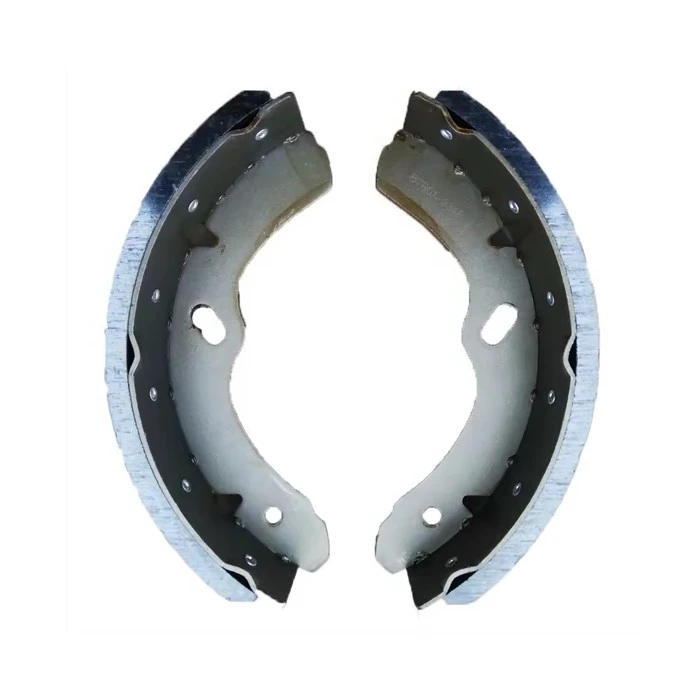
For small passenger cars used primarily for daily commuting in normal driving conditions, organic or low - metallic NAO brake shoes may be a good choice. They offer quiet operation, relatively low dust production, and adequate braking performance for most situations. You can find a variety of Automobile Brake Shoes suitable for different car models on our website.
For high - performance cars or vehicles that are used for towing or hauling heavy loads, semi - metallic or ceramic brake shoes are often recommended. These materials can handle the increased stress and heat generated by heavy use and provide the necessary stopping power.
Large semi - trucks require brake shoes that can withstand extremely high loads and temperatures. Semi - metallic or ceramic brake shoes are typically used in these applications. Our Semi Truck Drum Brake Shoes are designed to meet the demanding requirements of commercial trucking, offering reliable performance and long - lasting durability.
Conclusion
As a brake shoes supplier, I understand the importance of choosing the right material for your vehicle's braking system. Each type of brake shoe material has its own unique advantages and disadvantages, and the choice depends on a variety of factors. Whether you're looking for quiet operation, high - performance braking, or long - lasting durability, there is a brake shoe material that will meet your needs.
If you're in the market for new brake shoes, or if you have any questions about the different materials available, please don't hesitate to contact us. We have a team of experts who can help you select the best brake shoes for your vehicle and provide you with more information about our products. You can also visit our Automobile Brake Shoes Factory page to learn more about our manufacturing process and quality control measures.
References
- "Brake System Handbook" by Bosch
- "Automotive Brakes: Principles and Diagnosis" by James D. Halderman
- Industry reports and research on brake technology from SAE International