

As a trailer brake lining supplier, I've witnessed firsthand how road conditions can significantly impact the wear and tear of trailer brake linings. Understanding these effects is crucial for both trailer owners and those in the transportation industry. In this blog, I'll delve into the various road conditions and their influence on trailer brake lining wear, and provide insights on how to mitigate these effects.
Impact of Smooth and Well - Maintained Roads
Smooth and well - maintained roads are generally the most favorable conditions for trailer brake linings. On such roads, the braking process is more consistent. The tires roll smoothly, and the brakes are engaged in a more predictable manner. When the driver applies the brakes, the brake linings come into contact with the brake drums or rotors evenly. This even contact distributes the frictional force across the surface of the brake lining, reducing the chances of uneven wear.

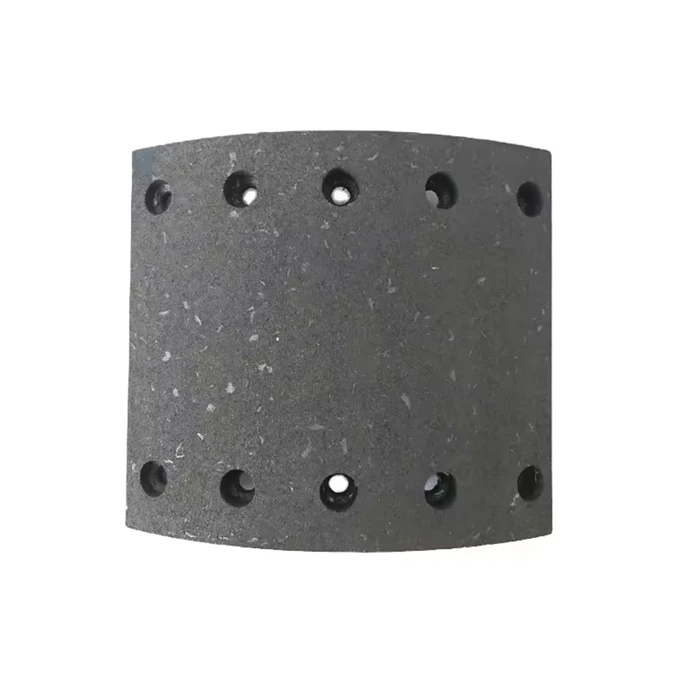
For example, on newly paved highways, the trailer can move at a relatively constant speed. The brakes are mainly used for minor speed adjustments or to stop at traffic signals. As a result, the brake linings experience less stress and wear at a slower rate. This is beneficial for the long - term performance of the brake linings. If you're looking for high - quality brake linings suitable for such conditions, our Brake Lining Set offers excellent durability and performance.
Challenges on Rough and Potholed Roads
Rough and potholed roads pose a significant challenge to trailer brake linings. When a trailer encounters potholes or uneven surfaces, it causes the trailer to bounce and jolt. This erratic movement can lead to sudden and uneven braking forces. The brake linings may be forced into contact with the brake drums or rotors more aggressively in some areas than others.
For instance, if a wheel hits a pothole, it can cause a momentary loss of traction. When the driver then applies the brakes to regain control, the brake lining on that particular wheel may experience a much higher frictional force. This uneven stress can lead to premature wear on the brake lining. Over time, this can cause the brake lining to develop hot spots, which are areas of excessive heat and wear. These hot spots can further degrade the brake lining material, reducing its effectiveness and lifespan. Our Heavy Truck Brake Linings are designed to withstand some of these challenges, but it's still important to be aware of the risks on rough roads.
Effects of Mountainous and Hilly Terrain
Mountainous and hilly terrain presents unique challenges for trailer brake linings. When descending a steep hill, the trailer's weight creates a significant amount of gravitational force. To control the speed, the driver has to apply the brakes continuously. This continuous braking generates a large amount of heat in the brake linings.
Excessive heat can cause the brake lining material to harden and glaze over. Glazing occurs when the surface of the brake lining becomes smooth and shiny due to the high temperatures. A glazed brake lining has reduced friction, which means it is less effective at stopping the trailer. As a result, the driver may have to apply more pressure on the brakes, further accelerating the wear of the brake linings.
On the other hand, when climbing a hill, the brakes are used less frequently. However, the sudden application of brakes after a long climb can also cause stress on the brake linings. Our Front Brake Lining is engineered to handle the heat generated during long descents, but proper driving techniques are also essential in mountainous areas.
Influence of Wet and Slippery Roads
Wet and slippery roads, such as those during rainy or snowy weather, can also affect trailer brake lining wear. When the road surface is wet, the tires have less traction. This means that the brakes have to work harder to stop the trailer. The brake linings may need to be in contact with the brake drums or rotors for a longer time to achieve the same level of braking force.
Moreover, water can also seep into the brake system and come into contact with the brake linings. This can cause corrosion and rust on the brake components, including the brake linings. Rust can weaken the brake lining material and cause it to break down more quickly. To ensure optimal performance on wet roads, it's important to choose brake linings that are resistant to moisture and corrosion.
Mitigating the Effects of Road Conditions on Brake Lining Wear
There are several ways to mitigate the effects of different road conditions on trailer brake lining wear. Firstly, regular maintenance is crucial. This includes inspecting the brake linings for signs of wear, checking the brake fluid levels, and ensuring that the brake system is properly adjusted.
Secondly, proper driving techniques can also make a big difference. For example, in mountainous areas, using engine braking (downshifting) can reduce the reliance on the brakes during descents. On rough roads, driving at a slower speed can minimize the impact of potholes and uneven surfaces on the brake system.
Finally, choosing the right brake linings for the specific road conditions is essential. As a trailer brake lining supplier, we offer a wide range of products designed to meet the needs of different road environments. Whether you're dealing with smooth highways, rough terrains, or wet roads, we have the right brake linings for you.
Conclusion
In conclusion, road conditions have a profound impact on trailer brake lining wear. Smooth roads are ideal for minimizing wear, while rough roads, mountainous terrain, and wet conditions can accelerate the wear process. By understanding these effects and taking appropriate measures, trailer owners can extend the lifespan of their brake linings and ensure the safety and reliability of their trailers.
If you're interested in learning more about our trailer brake lining products or have any questions regarding brake lining selection for different road conditions, we encourage you to reach out to us for a procurement discussion. Our team of experts is ready to assist you in finding the best solutions for your trailer's braking needs.
References
- Automotive Brake Systems Handbook, [Author's Name], [Year of Publication]
- Journal of Transportation Engineering, [Volume], [Issue], [Year]
- Brake Technology and Maintenance Guide, [Publisher], [Year]