

As a supplier of bus brake pads, I've witnessed firsthand the intricate relationship between a bus's weight and brake pad wear. This relationship is not only crucial for bus operators but also for the safety and efficiency of public transportation systems. In this blog, I'll delve into the science behind how a bus's weight impacts brake pad wear, drawing on industry knowledge and real - world experiences.
The Basics of Brake Pad Function
Before we explore the impact of bus weight, it's essential to understand how brake pads work. When a bus driver presses the brake pedal, hydraulic pressure is applied to the brake calipers. These calipers then squeeze the brake pads against the brake discs (rotors). The friction generated between the brake pads and the discs slows down the rotation of the wheels, bringing the bus to a halt.
The efficiency of this process depends on several factors, including the quality of the brake pads, the condition of the discs, and the force applied during braking. However, one of the most significant factors is the amount of kinetic energy that needs to be dissipated.
Kinetic Energy and Bus Weight
Kinetic energy is the energy an object possesses due to its motion. The formula for kinetic energy is (KE=\frac{1}{2}mv^{2}), where (m) is the mass (weight) of the object and (v) is its velocity. For a bus, this means that the heavier the bus and the faster it's moving, the more kinetic energy it has.
When a bus brakes, the brake pads must convert this kinetic energy into heat energy through friction. A heavier bus has more kinetic energy at the same speed compared to a lighter one. As a result, the brake pads have to work harder to dissipate this additional energy, leading to increased wear.
Let's consider an example. Suppose we have two buses, one fully loaded with passengers and luggage, and the other nearly empty. Both buses are traveling at the same speed. When they need to stop, the fully - loaded bus has a much higher kinetic energy. The brake pads on the fully - loaded bus will experience more stress and friction during braking, causing them to wear out faster.
Wear Mechanisms in Brake Pads
Brake pad wear occurs through two main mechanisms: abrasion and adhesion. Abrasion is the physical scraping of the brake pad material against the brake disc. As the bus weight increases, the force pressing the brake pads against the discs also increases. This higher force leads to more aggressive abrasion, as the hard particles in the brake pad material grind against the disc surface.
Adhesion, on the other hand, is the bonding of the brake pad material to the brake disc. During braking, high temperatures are generated at the interface between the pad and the disc. These temperatures can cause the brake pad material to melt and adhere to the disc. When the disc rotates, it tears away some of the adhered brake pad material, resulting in wear. A heavier bus generates more heat during braking due to the higher kinetic energy, which exacerbates the adhesion wear mechanism.
Impact on Brake Pad Lifespan
The increased wear caused by a heavier bus directly affects the lifespan of the brake pads. In general, brake pads on heavier buses will need to be replaced more frequently than those on lighter buses. This not only increases the maintenance costs for bus operators but also has implications for the availability of the buses. Frequent brake pad replacements mean that buses spend more time in the maintenance shop and less time on the road, potentially disrupting service schedules.
Factors That Exacerbate the Impact of Weight
Several factors can exacerbate the impact of bus weight on brake pad wear. One of these factors is driving style. Aggressive driving, such as rapid acceleration and hard braking, increases the kinetic energy that the brake pads need to dissipate. When combined with a heavy bus, this can significantly accelerate brake pad wear.
Another factor is the terrain. Buses operating on hilly or mountainous routes are constantly going up and down slopes. Going downhill, the gravitational force adds to the bus's kinetic energy, putting additional stress on the brake pads. Heavier buses are even more affected by this, as they have more mass for gravity to act upon.
Solutions for Reducing Brake Pad Wear
As a bus brake pad supplier, we offer several solutions to help reduce brake pad wear, especially for heavier buses. One solution is to use high - quality brake pads that are designed to withstand high levels of stress and heat. Our Discs And Brake Pads are made from advanced materials that have excellent heat dissipation properties and high resistance to abrasion and adhesion.
Another solution is to educate bus drivers on proper driving techniques. By encouraging smooth acceleration and braking, drivers can reduce the amount of kinetic energy that needs to be dissipated during braking, thereby extending the lifespan of the brake pads.
We also recommend regular maintenance and inspection of the braking system. This includes checking the brake pads for wear, ensuring that the brake discs are in good condition, and maintaining the proper hydraulic pressure in the braking system. Our Car Rear Brake Shoes are designed to work in harmony with the front brake pads, providing balanced braking performance and reducing overall wear.
The Role of Technology
Advancements in technology are also playing a significant role in reducing the impact of bus weight on brake pad wear. For example, regenerative braking systems are becoming more common in modern buses. These systems capture some of the kinetic energy during braking and convert it back into electrical energy, which can be used to power the bus's electrical systems or recharge the batteries. By reducing the amount of kinetic energy that needs to be dissipated by the brake pads, regenerative braking systems can significantly extend their lifespan.
In addition, some buses are now equipped with intelligent braking systems that adjust the braking force based on the bus's weight, speed, and other factors. These systems can optimize the braking process, ensuring that the brake pads are not over - stressed, even when the bus is carrying a heavy load.

Our Product Offerings
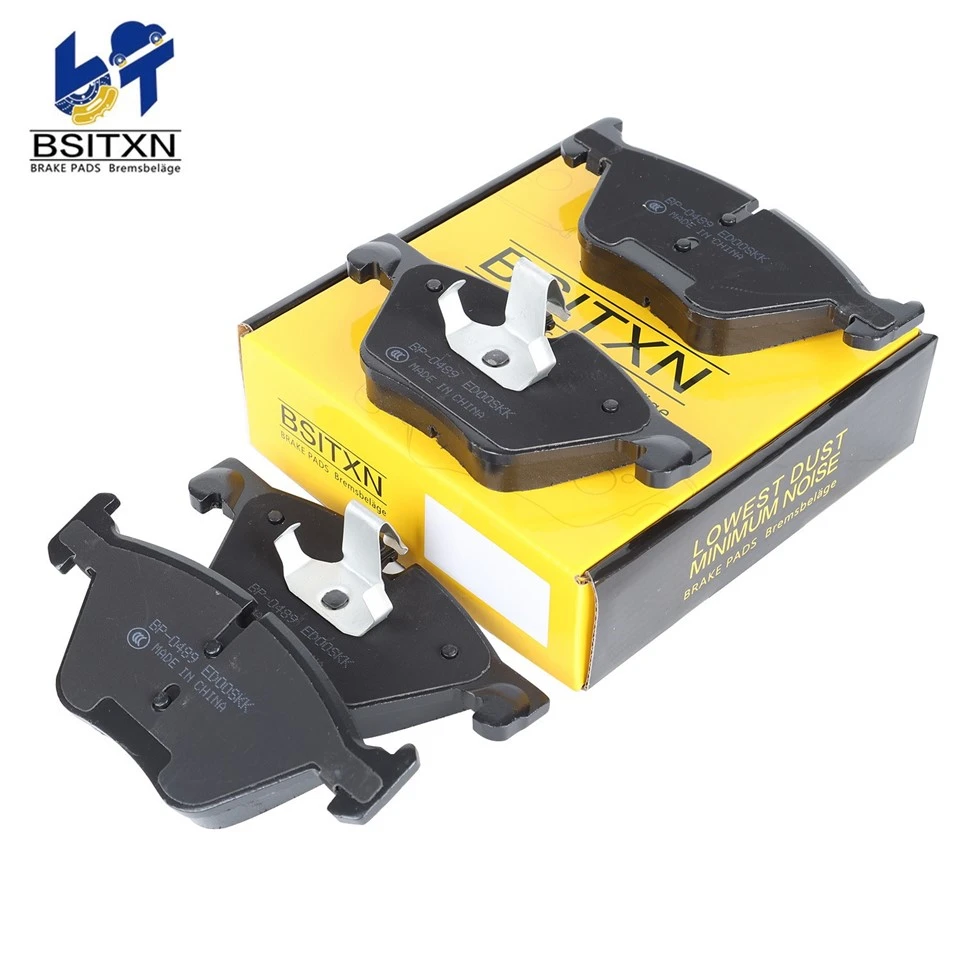
At our company, we offer a wide range of brake pads suitable for different types of buses, including heavy - duty models. Our 04465YZZDB 044650K030 D2228M D976 Ceramics Brake Pad is a prime example of our commitment to quality and performance. These ceramic brake pads are known for their low dust generation, quiet operation, and long lifespan, even under heavy loads.
Conclusion
In conclusion, the weight of a bus has a significant impact on brake pad wear. Heavier buses have more kinetic energy, which requires the brake pads to work harder to dissipate this energy. This leads to increased wear through abrasion and adhesion mechanisms, reducing the lifespan of the brake pads. However, by using high - quality brake pads, implementing proper driving techniques, and taking advantage of advanced technologies, bus operators can mitigate the impact of bus weight on brake pad wear.
If you're a bus operator or in the transportation industry and are looking for reliable brake pads that can withstand the challenges of heavy - duty use, we'd love to hear from you. Contact us to discuss your specific requirements and find the best brake pad solution for your buses.
References
- Automotive Brake Systems Handbook, Second Edition, Edited by John Crolla
- "The Effect of Vehicle Weight on Brake Pad Wear" - Journal of Automotive Engineering Research
- "Advances in Brake Pad Technology for Heavy - Duty Vehicles" - Proceedings of the International Conference on Automotive Engineering