

How does the coefficient of friction affect the braking performance of freight car brake shoes?
As a supplier of freight car brake shoes, I've witnessed firsthand the critical role that the coefficient of friction plays in the overall braking performance of these essential components. In this blog post, I'll delve into the science behind friction coefficients, how they impact freight car brake shoes, and why choosing the right brake shoes is crucial for safe and efficient operations.
Understanding the Coefficient of Friction
The coefficient of friction is a measure of the resistance between two surfaces in contact when one surface moves or attempts to move relative to the other. It is represented by the Greek letter μ (mu) and is a dimensionless quantity. There are two types of coefficients of friction: static friction (μs) and kinetic friction (μk). Static friction applies when the surfaces are at rest relative to each other, while kinetic friction comes into play when the surfaces are in motion.
In the context of freight car brake shoes, the coefficient of friction determines how effectively the brake shoe can convert the kinetic energy of the moving train into heat energy through friction. A higher coefficient of friction means more effective braking, as more energy can be dissipated in a shorter period, leading to a quicker stop.
Impact on Braking Performance
The coefficient of friction has a direct and profound impact on several aspects of freight car braking performance:
Stopping Distance: One of the most critical factors in braking is the stopping distance. A higher coefficient of friction between the brake shoe and the wheel reduces the stopping distance. When the brake is applied, the brake shoe presses against the wheel, and the friction force generated opposes the motion of the wheel. A larger friction force means a greater deceleration, allowing the train to stop in a shorter distance. This is especially important in emergency situations where every inch can make a difference.
Braking Force: The braking force is directly proportional to the coefficient of friction. According to the formula F = μN, where F is the frictional force, μ is the coefficient of friction, and N is the normal force (the force pressing the brake shoe against the wheel), a higher μ results in a larger braking force. This increased force enables the brake system to handle heavier loads and higher speeds more effectively.
Heat Generation: Friction between the brake shoe and the wheel generates heat. A higher coefficient of friction can lead to more heat being produced during braking. While some heat is necessary for the braking process, excessive heat can cause problems such as brake fade, where the coefficient of friction decreases due to overheating, reducing braking effectiveness. Therefore, it's essential to balance the coefficient of friction with the heat dissipation capabilities of the brake system.
Wear and Tear: The coefficient of friction also affects the wear rate of the brake shoes. A very high coefficient of friction can cause rapid wear of the brake shoe material, leading to shorter service life and increased maintenance costs. On the other hand, a very low coefficient of friction may require more force to achieve the same braking effect, which can also contribute to wear over time. Finding the optimal coefficient of friction is crucial for minimizing wear and ensuring long-lasting performance.
Factors Affecting the Coefficient of Friction in Freight Car Brake Shoes
Several factors can influence the coefficient of friction in freight car brake shoes:
Material Composition: The material used to manufacture the brake shoe is a primary determinant of the coefficient of friction. Different materials have different friction characteristics. For example, organic brake shoes typically have a lower coefficient of friction compared to metallic or semi - metallic brake shoes. However, organic brake shoes are often quieter and generate less dust.
Surface Conditions: The condition of the brake shoe surface and the wheel surface can significantly affect the coefficient of friction. Contaminants such as oil, grease, or dirt on the surfaces can reduce the friction coefficient. Additionally, wear and tear on the brake shoe or wheel can change the surface roughness, which in turn impacts the friction.
Temperature: As mentioned earlier, temperature can have a significant impact on the coefficient of friction. High temperatures can cause the brake shoe material to soften or glaze, reducing the friction coefficient. Some brake shoe materials are designed to maintain a relatively stable coefficient of friction over a wide range of temperatures.
Choosing the Right Freight Car Brake Shoes
As a supplier, I understand the importance of selecting the right brake shoes for specific applications. When choosing freight car brake shoes, it's essential to consider the coefficient of friction in relation to the following factors:
Load and Speed: For heavier loads and higher speeds, brake shoes with a higher coefficient of friction may be required to ensure adequate braking performance. However, it's important to balance this with the heat dissipation and wear characteristics of the brake shoes.
Operating Conditions: If the freight cars operate in harsh environments with a lot of dust, moisture, or contaminants, brake shoes that are resistant to these conditions and can maintain a stable coefficient of friction should be selected.
Compatibility: The brake shoes must be compatible with the existing brake system on the freight cars. This includes considerations such as the size, shape, and mounting requirements of the brake shoes.
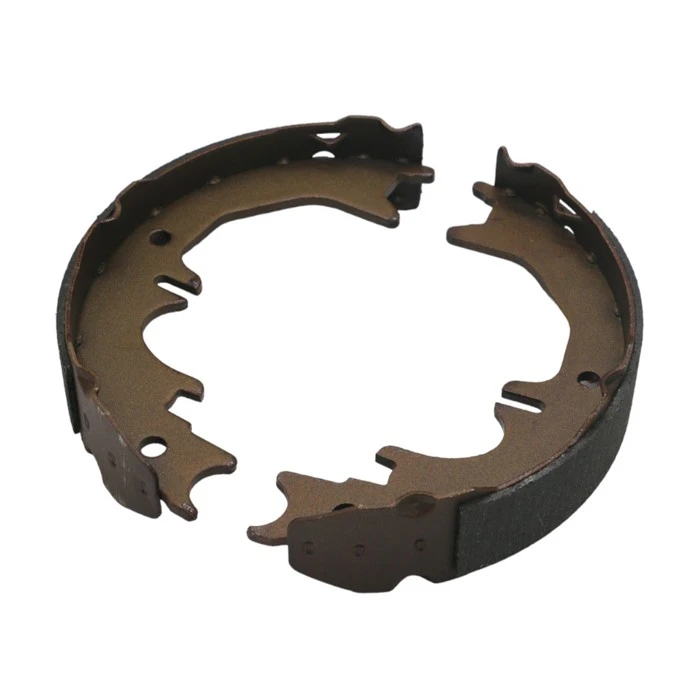
At our company, we offer a wide range of brake shoes, including Rear Disc Parking Brake Shoes, Semi Truck Drum Brake Shoes, and Automobile Brake Shoes. Our brake shoes are designed to provide optimal braking performance by carefully balancing the coefficient of friction with other important factors such as heat dissipation, wear resistance, and compatibility.
Conclusion
The coefficient of friction is a crucial factor in the braking performance of freight car brake shoes. It affects the stopping distance, braking force, heat generation, and wear and tear of the brake shoes. By understanding the science behind the coefficient of friction and considering the various factors that influence it, freight operators can make informed decisions when choosing brake shoes.
If you're in the market for high - quality freight car brake shoes, we invite you to contact us for a detailed discussion about your specific requirements. Our team of experts is ready to assist you in selecting the right brake shoes to ensure the safety and efficiency of your freight operations.

References
- Brake System Handbook, Society of Automotive Engineers.
- "Friction and Wear in Brake Systems" by J. F. Archard, Tribology International.
- "The Effect of Temperature on the Coefficient of Friction of Brake Materials" by R. K. Dube, Journal of Engineering Tribology.