

In the dynamic landscape of the freight industry, the performance of brake shoes is of paramount importance. As a leading supplier of freight car brake shoes, I've witnessed firsthand how new technologies are revolutionizing the capabilities of these critical components. In this blog, I'll explore the various ways in which emerging technologies are enhancing the performance of freight car brake shoes.
1. Advanced Materials
One of the most significant advancements in freight car brake shoe technology is the use of advanced materials. Traditional brake shoes were often made of cast iron or steel, which had limitations in terms of wear resistance and heat dissipation. Newer materials, such as ceramic composites, offer superior performance in these areas.
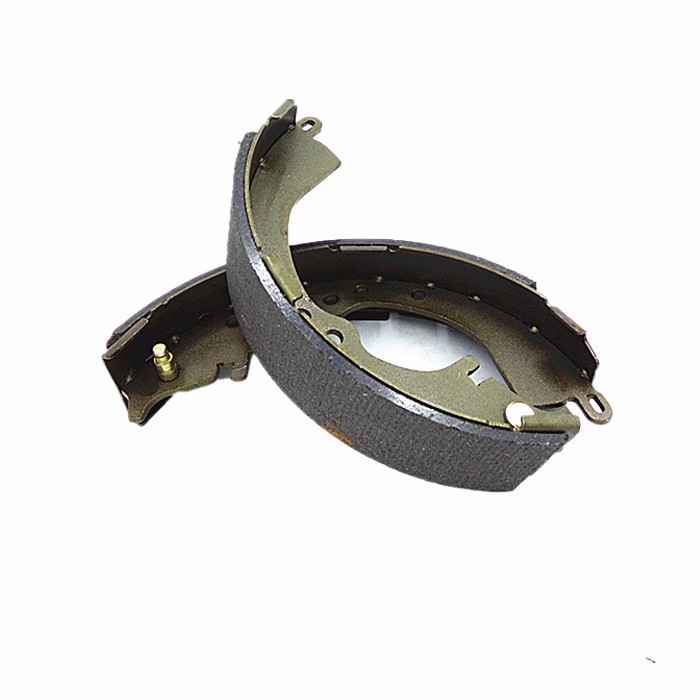
Ceramic drum brake shoes, for example, Ceramic Drum Brake Shoes have a much higher melting point than traditional materials. This means they can withstand the intense heat generated during braking without deforming or losing their braking effectiveness. The reduced heat also leads to less wear on the brake shoes themselves, as well as on the brake drums. Over time, this results in longer service intervals and lower maintenance costs for freight operators.
Another advantage of ceramic materials is their light weight. Compared to cast iron or steel brake shoes, ceramic brake shoes can significantly reduce the overall weight of the freight car. This not only improves fuel efficiency but also reduces the stress on other components of the braking system, such as the brake cylinders and linkages.
2. Precision Manufacturing
New manufacturing technologies have also played a crucial role in improving the performance of freight car brake shoes. Computer - numerical control (CNC) machining, for instance, allows for extremely precise shaping and sizing of brake shoes. This precision ensures a perfect fit between the brake shoe and the brake drum, maximizing the contact area during braking.
With a larger contact area, the braking force is distributed more evenly across the surface of the drum. This reduces the likelihood of uneven wear and hot spots, which can lead to brake fade and reduced braking performance. Additionally, CNC machining enables the production of complex geometries on the brake shoe surface. These geometries can be designed to enhance the friction coefficient and improve the braking response.
3D printing is another emerging manufacturing technology that holds great promise for brake shoe production. It allows for the creation of custom - designed brake shoes with internal structures that optimize heat dissipation and weight distribution. For example, 3D - printed brake shoes can have lattice - like structures inside, which increase the surface area for heat transfer while keeping the weight down.
3. Sensor Technology
The integration of sensor technology into freight car brake shoes is a game - changer. Sensors can monitor various parameters such as temperature, wear, and braking force in real - time. This data can be transmitted wirelessly to the train's control system or a remote monitoring station.
Temperature sensors are particularly important, as excessive heat can cause brake fade and damage to the brake shoes and drums. By continuously monitoring the temperature, the system can alert the train crew or maintenance personnel when the brakes are approaching dangerous levels. This allows for proactive maintenance, such as adjusting the braking pressure or replacing the brake shoes before a failure occurs.
Wear sensors can also provide valuable information about the condition of the brake shoes. They can accurately measure the thickness of the brake shoe lining and predict when it will need to be replaced. This helps to prevent unexpected brake failures and ensures that the braking system is always operating at its optimal performance.
4. Friction Modifiers
Friction modifiers are substances added to the brake shoe material to enhance its friction characteristics. Newer friction modifiers are designed to provide a stable friction coefficient over a wide range of operating conditions, including different temperatures, speeds, and loads.

For example, some friction modifiers can increase the friction coefficient at low speeds, which is crucial for starting and stopping the freight car smoothly. At high speeds, they can maintain a consistent friction level to ensure reliable braking performance. These modifiers also help to reduce noise and vibration during braking, improving the overall comfort and safety of the freight train operation.
5. Intelligent Braking Systems
The development of intelligent braking systems is closely related to the performance improvement of brake shoes. These systems use algorithms and control units to adjust the braking force based on real - time data from sensors.
For instance, an intelligent braking system can take into account the weight of the freight car, the speed of the train, and the track conditions when applying the brakes. It can then distribute the braking force evenly among all the brake shoes on the train, ensuring a smooth and efficient stop. This not only improves the performance of the brake shoes but also extends their service life by reducing the stress on individual components.
6. Surface Treatments
Surface treatments have become an important aspect of enhancing the performance of freight car brake shoes. Coatings can be applied to the brake shoe surface to improve its wear resistance, corrosion resistance, and friction properties.
One common surface treatment is the application of a thermal spray coating. This coating can create a hard, wear - resistant layer on the brake shoe surface. It protects the underlying material from abrasion and corrosion, especially in harsh operating environments such as wet or salty conditions.
Another type of surface treatment is a friction - enhancing coating. These coatings are designed to increase the friction coefficient between the brake shoe and the drum. They can be formulated to work under different temperature and humidity conditions, providing consistent braking performance.
Conclusion
As a supplier of freight car brake shoes, I'm excited about the potential of these new technologies to transform the industry. The use of advanced materials, precision manufacturing, sensor technology, friction modifiers, intelligent braking systems, and surface treatments is leading to brake shoes that are more reliable, efficient, and durable.
If you're in the freight industry and looking for high - performance brake shoes, I invite you to contact us for procurement and further discussions. We're committed to providing the latest in brake shoe technology to meet your needs and ensure the safety and efficiency of your freight operations.
References
- "Advances in Brake Materials and Technologies" - Journal of Automotive Engineering
- "Sensor - Enabled Braking Systems for Freight Trains" - Transportation Research Board
- "3D Printing in the Manufacturing of Brake Components" - Additive Manufacturing Journal