

Hey there! As a rear truck brake pads supplier, I've seen it all when it comes to brake pad wear and tear. Knowing when your rear truck brake pads are low is super important for your safety on the road and the longevity of your vehicle. In this blog, I'm gonna share some tell - tale signs that your rear truck brake pads might be running low.
1. Squealing or Squeaking Noises
One of the most common signs that your rear truck brake pads are wearing thin is a high - pitched squealing or squeaking noise when you apply the brakes. This noise usually comes from a built - in wear indicator on the brake pads. When the brake pads get to a certain thickness, the wear indicator starts to rub against the brake rotor, creating that annoying sound. It's like your truck is trying to tell you, "Hey, it's time to check those brake pads!"
Think of it this way. Your brake pads are like the shoes of your truck. When the tread on your shoes gets too thin, you start to feel it. Similarly, when the brake pads are almost gone, the wear indicator makes noise to alert you. If you hear this noise, don't ignore it. It's a clear sign that you need to take a closer look at your rear brake pads. You can find a wide range of Commercial Vehicle Brake Pads that are designed to reduce this kind of noise and offer better performance.
2. Grinding Sounds
If the squealing noise goes unnoticed and you keep driving, you might start to hear a grinding sound. This is a much more serious sign. When you hear grinding, it means that the brake pad material is completely worn out, and the metal backing of the brake pad is rubbing directly against the brake rotor. This is not only bad for your brake pads but also for the rotors. Rotors can get damaged easily when they're being ground against by metal, and replacing rotors is much more expensive than just changing the brake pads.
Grinding sounds are like an emergency alarm for your brakes. As soon as you hear this, pull over as soon as it's safe to do so and get your truck to a mechanic. You can also check out our Heavy Duty Truck Brake Pads, which are built to last and can prevent this kind of extreme wear.
3. Longer Stopping Distances
Another way to tell if your rear truck brake pads are low is if you notice that your truck takes longer to stop. When the brake pads are in good condition, they can grip the rotors tightly and stop the wheels quickly. But as the brake pads wear down, their ability to grip the rotors decreases. So, when you press the brake pedal, it takes more time and distance for your truck to come to a complete stop.
You might not notice this change right away, especially if it happens gradually. But if you compare how your truck stops now to how it stopped a few months ago, you'll be able to tell. For example, if you used to be able to stop at a red light with plenty of space in front of you, but now you're getting closer and closer to the car in front, it could be a sign of low brake pads. Our Transit Van Brake Pads are designed to provide consistent stopping power, even as they wear.
4. Vibration in the Brake Pedal
When you step on the brake pedal and feel a vibration, it could be due to low rear brake pads. As the brake pads wear unevenly, they can cause the brake rotor to warp. A warped rotor will make the brake pedal vibrate when you apply the brakes. It's like when you're driving over a bumpy road, but the bumpy feeling is coming from the brake pedal.
Vibration in the brake pedal is not only uncomfortable but also a sign that your braking system is not working properly. If you feel this vibration, it's a good idea to have your rear brake pads and rotors checked. Sometimes, just replacing the brake pads can fix the problem, but in other cases, you might need to resurface or replace the rotors as well.
5. Dashboard Warning Light
Many modern trucks are equipped with a brake pad warning light on the dashboard. This light is connected to a sensor in the brake system that monitors the thickness of the brake pads. When the brake pads reach a certain low level, the sensor sends a signal to the dashboard, and the warning light comes on.
It's important to pay attention to your dashboard lights. If the brake pad warning light comes on, it's a clear indication that you need to check your rear brake pads. Don't assume that it's a false alarm. It's better to be safe than sorry when it comes to your brakes. You can find high - quality brake pads that are compatible with your truck's warning system in our product range.
6. Visual Inspection
One of the most straightforward ways to check if your rear truck brake pads are low is to do a visual inspection. You don't need to be a mechanic to do this. First, you'll need to jack up your truck and remove the wheels. Once the wheels are off, you can see the brake caliper and the brake pads.

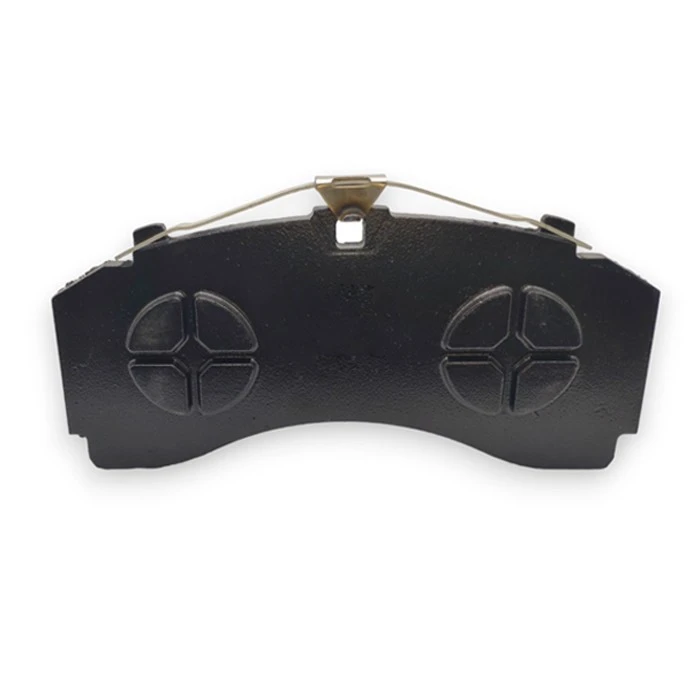
The brake pads are the flat pieces of material that sit inside the caliper. You can measure the thickness of the brake pads with a ruler. Most brake pads come with a recommended minimum thickness. If the brake pads are close to or below this minimum thickness, it's time to replace them. If you're not comfortable doing this yourself, you can take your truck to a professional mechanic, but it's still good to know what to look for.
Conclusion
Knowing when your rear truck brake pads are low is crucial for your safety and the performance of your vehicle. Whether it's the squealing noise, grinding sounds, longer stopping distances, vibration in the brake pedal, dashboard warning light, or a visual inspection, there are many ways to tell if your brake pads need to be replaced.
As a rear truck brake pads supplier, we offer a wide range of brake pads that are designed to meet the needs of different trucks. Whether you have a commercial vehicle, a transit van, or a heavy - duty truck, we've got you covered. If you're experiencing any of the signs mentioned above, don't hesitate to reach out to us. We can help you find the right brake pads for your truck and ensure that your braking system is in top - notch condition.
If you're interested in purchasing high - quality rear truck brake pads, feel free to contact us for more information and to start a procurement discussion. We're here to help you keep your trucks safe on the road.
References
- Brake System Basics: A Guide for Truck Owners. Published by an automotive industry magazine.
- How to Check Your Brake Pads. An online automotive maintenance guide.