

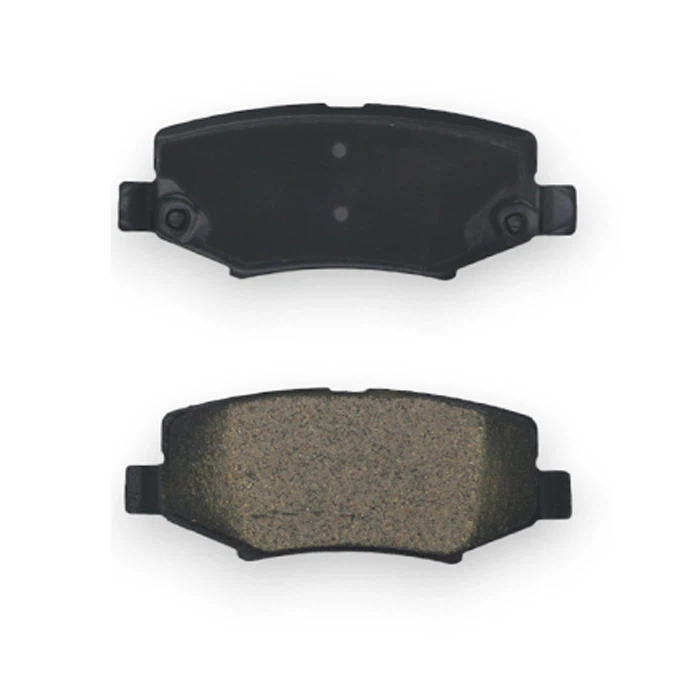
Shandong Best Auto Parts Co., Ltd. is a brake pad manufacturer located in Shandong, China. The factory was established in 2015. We focus on the production of car brake pads, brake shoes and truck brake pads, brake lining.
As an OEM brake pad and brake shoe manufacturer and supplier, we currently have more than 3,000 models of production molds and maintain more than 2,000 models in stock, we have been committed to providing high-quality and reliable products. Our formulas are asbestos-free, dust-free, noise-free, and have long service life, and are trusted by customers. At the same time, we are also actively exploring the market. Our team is full of professional knowledge and experience, and we will provide high-quality after-sales service and will do our best to meet customer needs.
Why choose us?
Cover more models
We offer an extensive range of ceramic brake pads tailored to fit all models of Japanese, Korean, German, and American cars, providing our customers with a broad selection for any vehicle.
Small MOQ
Our minimum order quantity is only 1 set, providing you with great flexibility to meet your diverse needs for brake pads.
Quality assurance
A full set of quality testing equipment will allow us to repeatedly test and obtain data after production is completed to check product quality.
Fast delivery
We understand that fast shipping is very important to customers, so the models we have in stock only take 3 days.
Supply chain
Establish an integrated supply chain, production chain, and transportation chain. The best solution will be provided by Shandong Best Auto Parts.
Aftersales service
Act quickly on customer feedback to resolve any issues you may have after your purchase.

Carbon Fiber Ceramic Brake Pads
For high-performance vehicles, carbon fiber ceramic brake pads are the pinnacle of braking technology. These pads combine the lightweight properties of carbon fiber with the heat resistance of ceramics. Expect exceptional stopping power, reduced dust, and consistent performance even under extreme conditions.

Carbon Metallic Disc Brake Pads
Carbon metallic disc brake pads combine the best of both worlds: carbon and metal. These pads offer superior heat resistance, durability, and consistent performance. Trust our carbon metallic pads for confident braking in any situation.

Light vehicles, including cars and SUVs, rely on high-quality brake pads for safe stopping. Our ceramic and semi-metallic brake pads offer excellent performance, low dust, and minimal noise. Whether you're commuting or embarking on a road trip, trust our light vehicle brake pads to keep you safe.

Premium quality of less metal brake pads: Drivers seeking high-performance braking will prefer low-metal brake pads because they contain only a small amount of metal and are more responsive, requiring minimal pedal pressure. Low price and high cost performance.

When it comes to ensuring safety on the road, reliable brake pads are essential. The 04460-8H385 ceramic brake pads offer exceptional performance and durability, making them an excellent choice for various INFINITI brake pads and NISSAN brake pads. Let's delve into the details of these high-quality brake pads.

When it comes to braking performance, choosing the right silent Brake pads is crucial for your safety on the road. The 542120 silent Brake pad set offers exceptional quality and reliability, making it an ideal choice for various car models.

Our brake pads are meticulously designed to fit specific vehicle models, ensuring optimal braking performance. OE-standard dimensions guarantee a seamless installation process. Whether you're an automotive technician, a vehicle owner, or simply passionate about auto parts, Shandong Best Auto Parts is the reliable choice.

Electric vehicles (EVs) require specialized brake pads to accommodate their unique characteristics. Here's why EV brake pads matter.
Specifically designed for Toyota COROLLA 04465-02220 and other compatible models.OE part numbers ensure reliable performance and safety.
Upgrade to sustainable braking solutions with our Japanese ceramics car brake pads.

Electric vehicles demand specialized brake pads. These pads are engineered to handle regenerative braking, which captures energy during deceleration. Our EV brake pads strike the perfect balance between efficiency, durability, and low dust production, enhancing your EV's overall performance.
These brake pads are made from ceramic very similar to the type of ceramic used to make pottery and plates, but are denser and a lot more durable. Ceramic brake pads also have fine copper fibers embedded within them, to help increase their friction and heat conductivity.
Benefits of Auto Ceramic Brake Pads
Brake fade resistance
Good ceramic brake pads generally can resist brake fade. Brake fade is typically caused by overheating in brake pads as a result of converting kinetic energy to heat energy when the brake is applied. Brake fade decreases the efficiency of ceramic brake pads considerably.
Stability
Ceramic brake pads usually exhibit more stability over a wide range of temperatures than other types of brake pads.
Corrosion and oxidation resistance
A good ceramic brake pad should be resistant to corrosion and oxidation. It should be able to withstand exposure to chemicals without any change in mechanical properties. Corrosion and oxidation can greatly decrease the half-life of a brake.
Low friction coefficient
A low friction coefficient is one property to look out for when choosing a ceramic brake pad. The friction coefficient should be low enough that the wheels do not lock. However, it should not be so low that there is insufficient stopping power. The friction coefficient of an ideal ceramic brake pad lies between 0.3 and 0.5.
Less brake dust
Ceramic brake pads are more wear resistant than other types of brake pads. Hence, they produce less brake dust. While other brake pads may produce enough dust to affect other components of disc rotors, ceramic brake pads do not.
Quiet braking
Unlike other types of brake pads like fully metallic brake pads, ceramic brake pads do not make loud sounds. This is because the noise they produce exceeds the normal hearing range in humans.
● We can identify the ceramic brake pads by color, which specialists call it as "hardcore color". The surface rof ceramic brake pad looks like pebble, but without any sharp lights(or called metallic light). As we know, the metallic brake pads have metallic material in pad, it have such metallic sharp light.
● We can identify the ceramic brake pads by hand touching. If we touch the surface of ceramic brake pads by fingers, They are clean, and there are not any black or other dirty dust on our hand. but if we touch the metallic brake pads, there will be dirty black metallic powder on hands.
● The real ceramic brake pads don't rust. Because ceramic brake pads are made of a durable ceramic compound, there are no metallic fiber in it. Generally, it won water. If you find the Ceramic brake pad is rusty, it may be not a real ceramic disc pads., because there are some friction materials metallic fibers in brake pads, such as copper fiber, steel fiber, steel wool, and so on.
● After we usinge the ceramic brake pad, it canwe can find there are white powder on disc after brakeing wearing, and these clean powerit will not damage the brake rotors., while if we usinge the metallic brake pads, there are black friction powers on disc or wheels,, those blackso we know these are the powerss are from all kinds of metal fibers and carbon fibers wearing.
● Use a magnet to identify.If the magnet can be adsorbed on the friction material of the brake pad, it means that this is not a ceramic brake pad. There are a lot of fake ceramic brake pads on the market, they use less metal to pretend to be ceramic brake pads. You use a magnet to identify easily.
How to Replace Auto Ceramic Brake Pads
Remove your wheel
Before starting this job, take the cap off the brake fluid reservoir to give the pressure you create in the system during the process somewhere to escape. Put some cloth or rag around the reservoir to catch any fluid that may escape during the process. Brake fluid can remove paint from surfaces under the bonnet if not removed.
To access the brake pads, you'll need to remove your wheel. Apply the handbrake, and if possible, chock the wheels to prevent the vehicle moving when raised. If fitted, remove the wheel cover and slacken the wheel nuts while your car is on the ground.
Then raise your car with a jack, using your vehicle manufacturer's recommended jacking points - see your vehicle handbook for the location of these. Place axle stands under the vehicle for extra support.
You can now unscrew the wheel nuts or bolts and remove the wheel. Always inspect the wheel nuts or bolts to check they are in a good and clean condition. Any corrosion should be removed with a wire brush.
Remove the brake calliper
Next, you'll need to undo the guide pin bolt in order to remove the calliper – these bolts align the calliper to the brake disc. You can undo the guide pin bolt by holding it with a spanner or socket and wrench and unscrewing. If it's stuck, you can use some freeing oil to loosen it, but take care not to get any on the surface of the brake disc.
Next, unbolt the calliper and swing them free. Don't leave the calliper hanging, as this will put strain on the brake line. Instead, use ties or bungee cable to hang it safely.
Remove the brake pads
With the calliper out of the way, you can remove any clips that may be holding the brake pads in place and remove them from the calliper carrier.
Check the brake disc
Inspect the condition of your brake discs. If there is any heavy scoring, you'll need to replace them as a pair too.
Apply grease to new brake pads
Before you fit the brake pads, clean any corrosion off the calliper carrier and its slides with a wire brush before applying a little Ceratec to the edges and where the back plates come into contact with the calliper and its piston(s). Make sure you don't get any grease on the friction material.
Fit brake pads
Fit the new brake pads into the calliper carrier, making sure that the pad can move freely back and forth, and the friction material is facing the brake disc.
Then, untie and refit the brake calliper. In some brake pad kits, new calliper retaining bolts may be supplied. If so, always fit them and take notice of any torque settings required to ensure they are tightened to the correct setting. You may need to push the calliper piston back into its cylinder in order to fit the new thicker brake pad. This may cause the brake fluid to rise to above the maximum level in the reservoir. This is the purpose of the cloth around it to catch any excess.
Test brake pads
When you've done both sides, press the brake pedal a few times to bring the brake pads up to the disc, then check and top up the brake fluid level if necessary, removing the cloth and any excess fluid that may have escaped.
Refit the wheel
Before refitting, make sure that the mating surfaces of the wheel and hub are clean and free of any corrosion – you can use a wire brush to do so. With the new brake pads fitted, you can now place your wheel back on the hub and secure the wheel nuts or bolts by hand. Tighten the wheel using a wheel brace or wrench so that it can be rotated to ensure that it is located correctly. Always consult your owner's manual.
Remove the axle stands and lower the jack, then once your vehicle is back on the ground, tighten the wheel nuts or bolts fully and replace the wheel cover. It is advisable to use a torque wrench to ensure that the wheel is tightened to the correct setting.
When driving the vehicle for the first time following brake pad replacement, the pedal may feel different. It could feel spongier than before - this is the new friction material coming into contact with the brake disc. It is vital to "bed in" a new set of brakes by carefully applying the brakes for the first 100 miles, and you should avoid heavy braking during this time. Bedding in will ensure that the brake pads operate correctly and last appropriately.
Auto ceramic brake pads play a pivotal role in the braking system. Here's a simple breakdown of the process:
Activation: When you press the brake pedal, it activates a cylinder filled with brake fluid.
Pressure transmission: This fluid then transmits the pressure to the brake calipers.
Friction creation: The brake calipers press the brake pads against the brake rotors, creating friction.
Vehicle deceleration: This friction slows down the rotors and, consequently, the wheels of the vehicle, bringing it to a halt.
The efficiency of this process largely depends on the condition of the brake pads. If they are worn out, the braking efficiency can be severely compromised.
As ceramics have long been praised for their heat resistance and durability, they have become a prime choice for brake pad manufacturers. The extreme hardness, resistance to weathering and wear, high stiffness, resistance to chemical corrosion and compressive strength of these non-metallic substances heighten their applicability. Automotive, agricultural and transit industries make use of both commercial and industrial grade ceramic brake pads. Ceramics begin as a granular powder that is purified before being measured and often combined with other ceramics or substances such as metal shavings.
The friction materials are then bonded together by manufacturing techniques such as sintering, firing, hot pressing, hipping, extrusion, fusing, slip or pressure casting, injection molding and deposition many of which can be utilized in the production of a wide variety of brake pads. Because these composites retain the positive qualities of each element entered into them, they can be made specific to a given industrial or commercial application. Alumina, or aluminum oxide, boron carbides and silicon carbide are the most common of the advanced, technical and engineering grade ceramics used in the production of brake pads.
How to Maintain Auto Ceramic Brake Pads
Check the brake pad thickness regularly
Ceramic brake pads are more wear-resistant than traditional brake pads, but they will still wear after long-term use. Therefore, it is very necessary to check the thickness of the brake pads regularly. When it is found that the thickness of the brake pad is lower than the minimum thickness specified by the manufacturer, the brake pad should be replaced in time to avoid safety problems such as brake failure.
Avoid sudden braking
Sudden braking will cause the brake pads to bear excessive pressure instantly, thereby accelerating the wear of the brake pads. Therefore, in daily driving, you should try to avoid sudden braking, especially on highways and mountainous areas that require frequent braking.
Clean the brake system regularly
Dust, sediment and other debris on the brake system will reduce the braking effect of the brake pads and accelerate the wear of the brake pads. Therefore, it is very necessary to clean the brake system regularly. When cleaning, you can use professional brake cleaner or alcohol and other cleaners to completely remove debris from the brake pads and brake discs.
Avoid continuous braking for a long time
Continuous braking for a long time will cause the brake pads to overheat, thereby accelerating the wear of the brake pads. Therefore, when braking for a long time is required, the vehicle should be stopped and rested in time to allow the brake pads to cool down.
Choose the right brake pads
Different types of ceramic brake pads are suitable for different models and driving environments. Therefore, when choosing ceramic brake pads, you should choose the appropriate brake pad according to your car model, driving environment and driving habits to achieve the best braking effect and brake pad life.
Driving style and conditions
Consider your typical driving conditions and style when selecting brake pad materials. For example, if you frequently drive in stop-and-go traffic, a quieter and dust-free option like ceramic may be beneficial.
Vehicle type and performance requirements
Your vehicle's weight and performance requirements can influence the best brake pad material. Heavier vehicles or those with high-performance needs may benefit from the enhanced braking capabilities of ceramic pads.
Maintenance and replacement costs
Consider the long-term maintenance and replacement costs associated with different brake pad materials. While ceramic pads may be more expensive upfront, their longevity can save money in the long run.
Our Factory
Shandong Best Auto Parts Co., Ltd. is a brake pad manufacturer located in Shandong, China. The factory was established in 2015. We focus on the production of car brake pads, brake shoes and truck brake pads, brake lining. As an OEM brake pad and brake shoe manufacturer and supplier, we currently have more than 3,000 models of production molds and maintain more than 2,000 models in stock, we have been committed to providing high-quality and reliable products. Our formulas are asbestos-free, dust-free, noise-free, and have long service life, and are trusted by customers. At the same time, we are also actively exploring the market. Our team is full of professional knowledge and experience, and we will provide high-quality after-sales service and will do our best to meet customer needs.


FAQ
Hot Tags: auto ceramic brake pads, China auto ceramic brake pads manufacturers, suppliers, factory, french brake pads, pair of brake pads, german brake pads, custom brake pads, coupe brake pads, clearance brake pads


