

What is the performance of copper free brake pads in wet braking?
As a supplier of copper free brake pads, I've witnessed firsthand the growing demand for these eco - friendly alternatives in the automotive market. One of the most critical aspects that consumers often inquire about is the performance of copper free brake pads in wet braking conditions. In this blog, I'll delve into the key factors that influence their performance and how they stack up against traditional brake pads.
The Importance of Wet Braking Performance
Wet braking is a scenario that every driver will encounter at some point. Whether it's driving in the rain, through a puddle, or in a coastal area with high humidity, water on the road surface can significantly affect the braking system's efficiency. When water gets between the brake pads and the rotors, it can act as a lubricant, reducing the friction needed to stop the vehicle quickly and safely. This is where the performance of brake pads becomes crucial.
Composition of Copper Free Brake Pads
Copper free brake pads come in various formulations, but two common types are semi - metallic and ceramic. Semi Metallic Disc Brake Pads typically contain a mixture of metal fibers, such as steel, iron, and other alloys, along with friction modifiers and binders. These metal fibers provide good heat dissipation and high friction levels. On the other hand, Copper Free Ceramic Brake Pads are made from ceramic materials, along with non - ferrous metals and other additives. They are known for their quiet operation, low dust production, and good wear resistance.

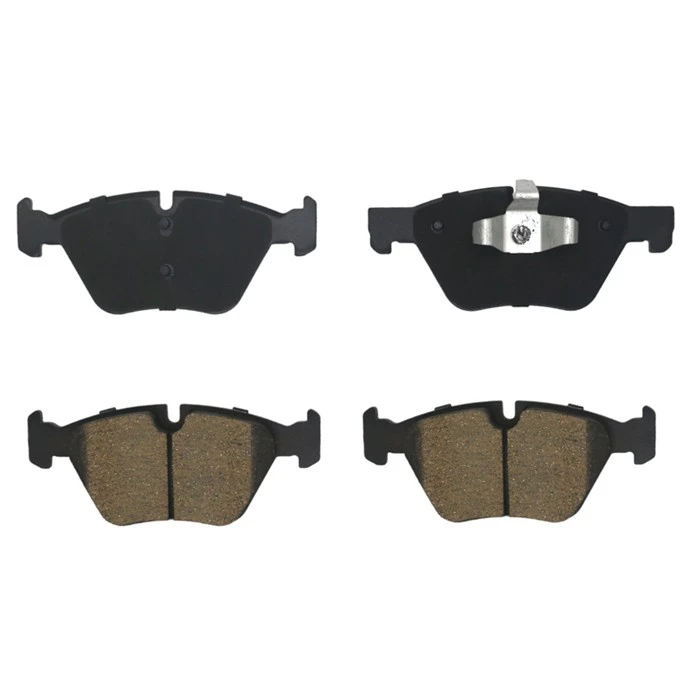
Friction Performance in Wet Conditions
In wet braking, friction is the name of the game. The ability of brake pads to maintain friction with the rotors despite the presence of water is essential for effective braking. Copper free semi - metallic brake pads generally perform well in wet conditions. The metal fibers in these pads can cut through the water film on the rotors, maintaining contact and providing a relatively high level of friction. However, they may be more prone to corrosion over time, which can affect their long - term performance.
Copper free ceramic brake pads also have good wet braking performance. The ceramic materials used in these pads have a high resistance to water absorption, which means they can quickly shed water and regain friction. Additionally, ceramic brake pads tend to produce a more consistent friction coefficient in both dry and wet conditions, resulting in more predictable braking performance.
Heat Dissipation
Heat is another factor that can impact wet braking performance. When brakes are applied, a significant amount of heat is generated. In wet conditions, the water on the rotors can help to cool the brakes, but if the heat is not dissipated efficiently, it can lead to brake fade. Copper free semi - metallic brake pads are excellent at heat dissipation due to the high thermal conductivity of the metal fibers. This allows them to handle high - energy stops without significant loss of braking power, even in wet conditions.
Copper free ceramic brake pads also have good heat dissipation properties. The ceramic materials used in these pads can withstand high temperatures without degrading, and they can transfer heat away from the braking surface effectively. This helps to prevent brake fade and ensures consistent braking performance in wet weather.
Noise and Vibration
Noise and vibration during braking are not only annoying but can also be an indication of poor braking performance. In wet conditions, copper free brake pads generally perform well in terms of noise and vibration reduction. Copper free ceramic brake pads are particularly known for their quiet operation. The ceramic materials dampen vibrations and reduce the likelihood of squealing or grinding noises, even when the brakes are wet.
Semi - metallic brake pads may produce more noise in wet conditions compared to ceramic pads. The metal fibers in these pads can sometimes cause vibrations that result in noise, especially if the rotors are wet or dirty. However, advancements in semi - metallic brake pad technology have led to significant improvements in noise reduction over the years.
Wear Resistance
Wear resistance is an important consideration for brake pads, especially in wet conditions where the presence of water can accelerate wear. Copper free ceramic brake pads have excellent wear resistance. The hard ceramic materials used in these pads are less likely to wear down quickly, even when exposed to water and other contaminants. This means that they can provide a longer service life compared to some other types of brake pads.
Semi - metallic brake pads also have good wear resistance, but they may wear more quickly in wet conditions due to the potential for corrosion. However, proper maintenance and the use of high - quality semi - metallic brake pads can help to minimize wear and ensure a long service life.
Conclusion
In conclusion, copper free brake pads, whether semi - metallic or ceramic, offer excellent performance in wet braking conditions. They provide good friction, efficient heat dissipation, low noise and vibration, and high wear resistance. As a supplier of Auto Spare Parts Brake Pads, I am confident in the quality and performance of our copper free brake pads.
If you are in the market for high - quality copper free brake pads, I encourage you to contact us for a detailed discussion about your specific needs. Our team of experts is ready to assist you in finding the right brake pads for your vehicle and ensuring that you have a safe and reliable braking system. Whether you are a car enthusiast, a mechanic, or a fleet manager, we can provide you with the best solutions for your braking needs.
References
- "Automotive Brake Systems: Fundamentals, Modeling, and Control" by Lars Eriksson and Lars Nielsen
- "The Handbook of Automotive Brakes" by Joseph F. Jurgen