

What is the friction coefficient of off road brake pads?
As a supplier of off - road brake pads, I've encountered numerous inquiries regarding the friction coefficient of these essential automotive components. The friction coefficient is a crucial factor that determines the braking performance of off - road vehicles, and understanding its nuances can significantly impact both safety and efficiency during off - road adventures.
Understanding the Friction Coefficient
The friction coefficient is a dimensionless quantity that represents the ratio of the frictional force between two surfaces in contact to the normal force pressing the surfaces together. In the context of off - road brake pads, it indicates how effectively the brake pads can grip the brake rotors to slow down or stop the vehicle. A higher friction coefficient generally means better braking performance, as more force can be generated to oppose the vehicle's motion.
However, it's important to note that the friction coefficient is not a static value. It can vary depending on several factors, including the temperature of the brake system, the speed of the vehicle, the type of materials used in the brake pads and rotors, and the environmental conditions. For off - road vehicles, which often operate in harsh and unpredictable environments, these variations can be even more pronounced.
Factors Affecting the Friction Coefficient of Off - Road Brake Pads
-
Material Composition
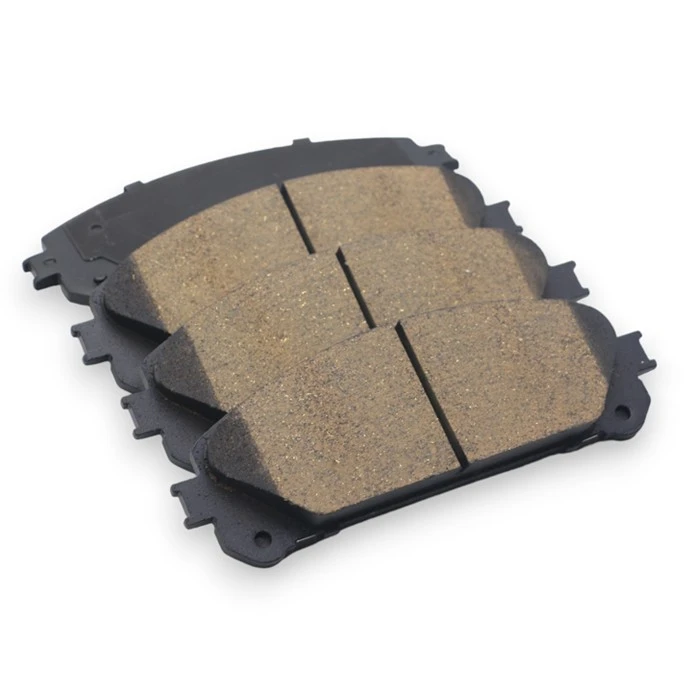
- Off - road brake pads are typically made from a variety of materials, each with its own unique friction characteristics. For example, [High Friction Brake Pads](/brake - pads/car - brake - pads/high - friction - brake - pads.html) are designed to provide a high coefficient of friction under normal operating conditions. These pads often contain a high percentage of ceramic or semi - metallic materials.
- Ceramic brake pads offer several advantages, such as low noise, reduced dust, and excellent heat dissipation. They tend to have a relatively stable friction coefficient over a wide range of temperatures, making them suitable for off - road applications where the brake system may experience significant temperature fluctuations.
- On the other hand, [Metallic Automotive Brake Pads](/brake - pads/car - brake - pads/metallic - automotive - brake - pads.html) are known for their high heat resistance and durability. They can generate a high friction force, especially at high speeds and under heavy braking conditions. However, metallic pads may produce more noise and dust compared to ceramic pads.
-
Temperature
- Temperature has a significant impact on the friction coefficient of off - road brake pads. As the temperature of the brake system increases, the friction coefficient may change. At low temperatures, the brake pads may not be able to generate enough friction, resulting in reduced braking performance.
- As the temperature rises, the friction coefficient of some brake pads may increase initially, reaching an optimal level. However, if the temperature gets too high, the brake pads may experience "brake fade." Brake fade occurs when the friction coefficient decreases significantly due to the breakdown of the brake pad material or the formation of a gas layer between the brake pad and the rotor. This can lead to a loss of braking power and potentially dangerous situations.
-
Speed and Load
- The speed and load of the off - road vehicle also affect the friction coefficient. At higher speeds, the braking force required to stop the vehicle is greater. Off - road brake pads need to be able to maintain a sufficient friction coefficient to handle these increased forces.
- Similarly, when the vehicle is carrying a heavy load, such as equipment or passengers, the brake system has to work harder. The brake pads must be capable of generating enough friction to slow down or stop the heavier vehicle safely.
-
Environmental Conditions
- Off - road vehicles operate in a wide range of environmental conditions, including mud, water, dust, and extreme temperatures. These conditions can have a negative impact on the friction coefficient of the brake pads.
- For example, if the brake pads get wet, the water can act as a lubricant, reducing the friction between the pads and the rotors. In dusty environments, the dust particles can get trapped between the brake pad and the rotor, affecting the contact surface and potentially reducing the friction coefficient.
Measuring the Friction Coefficient
The friction coefficient of off - road brake pads is typically measured using a dynamometer. A dynamometer is a device that can simulate the braking conditions of a vehicle and measure the frictional force generated by the brake pads.
The test is usually conducted under specific conditions, such as a certain speed, temperature, and load. The results are then used to determine the performance characteristics of the brake pads, including the friction coefficient.
In addition to laboratory testing, real - world testing is also essential. Off - road vehicles are often used in challenging terrains and conditions that cannot be fully replicated in a laboratory. Real - world testing allows us to evaluate the performance of the brake pads in actual off - road situations and make any necessary adjustments.
Importance of the Right Friction Coefficient for Off - Road Vehicles
Having the right friction coefficient for off - road brake pads is crucial for several reasons. Firstly, it ensures the safety of the vehicle and its occupants. In off - road environments, where unexpected obstacles and terrain changes are common, reliable braking performance is essential to avoid accidents.
Secondly, the right friction coefficient can improve the overall efficiency of the vehicle. A brake system with an appropriate friction coefficient can stop the vehicle more quickly, reducing the distance traveled during braking. This can save energy and potentially improve fuel efficiency.
Finally, it can enhance the driving experience. Off - road enthusiasts want to enjoy the thrill of the adventure without having to worry about the braking performance of their vehicles. A well - performing brake system with the right friction coefficient allows for more confident and enjoyable driving.

Our Off - Road Brake Pads and Friction Coefficient
As a supplier of off - road brake pads, we understand the importance of providing products with the right friction coefficient. Our brake pads are carefully engineered and tested to ensure optimal performance in a variety of off - road conditions.
We offer a range of brake pads, including [High Friction Brake Pads](/brake - pads/car - brake - pads/high - friction - brake - pads.html), [Metallic Automotive Brake Pads](/brake - pads/car - brake - pads/metallic - automotive - brake - pads.html), and [Electric Vehicle Brake Pads](/brake - pads/car - brake - pads/electric - vehicle - brake - pads.html). Each type of brake pad is designed to meet the specific needs of different off - road vehicles and driving styles.
Our research and development team continuously works on improving the friction characteristics of our brake pads. We use advanced materials and manufacturing techniques to ensure that our brake pads can maintain a stable friction coefficient over a wide range of temperatures and operating conditions.
Contact Us for Procurement
If you are in the market for high - quality off - road brake pads, we invite you to contact us for procurement discussions. We can provide you with detailed information about our products, including their friction coefficients, performance characteristics, and pricing. Our experienced sales team is ready to assist you in finding the right brake pads for your off - road vehicles. Whether you are a professional off - road racer or an enthusiast looking for reliable braking performance, we have the solutions you need.
References
- Society of Automotive Engineers (SAE) standards on brake testing and performance.
- Automotive Brake Systems: Fundamentals, Modeling, and Design by Manfred Lienkamp.
- Technical papers on brake friction materials and their performance in off - road applications.