

Hey there! As a brake lining supplier, I've gotten tons of questions about the differences in brake lining requirements for disc and drum brakes. It's a topic that's super important for anyone in the automotive industry, whether you're a mechanic, a vehicle owner, or just someone interested in how cars work. So, let's dive right in and break it down.
Basic Structure and Working Principle
First off, let's talk about how disc and drum brakes work. Disc brakes are like the cool kids on the block. They've got a rotor (kind of like a big metal disc) that spins with the wheel. The brake caliper, which is like a clamp, squeezes the brake pads against the rotor when you hit the brakes. This friction between the pads and the rotor slows down the wheel.
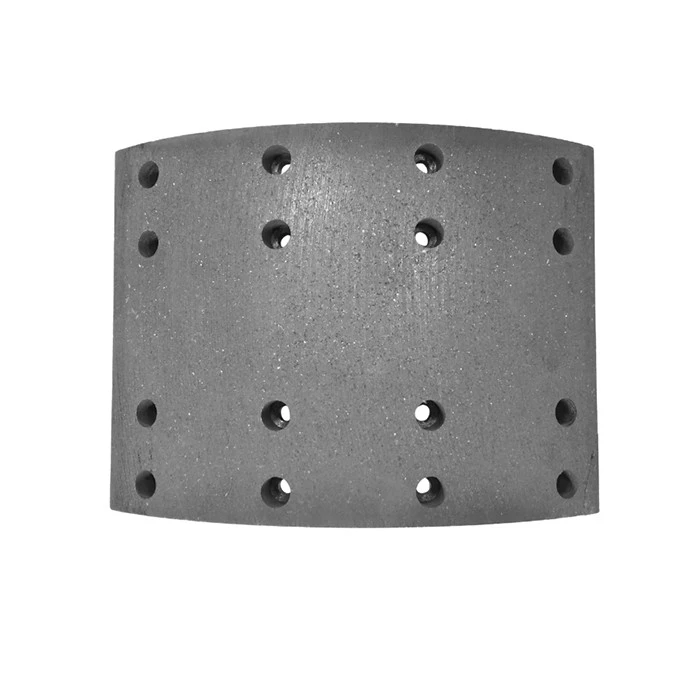
On the other hand, drum brakes are a bit more old - school. They have a drum that rotates with the wheel. Inside the drum, there are brake shoes. When you press the brakes, the brake shoes expand and press against the inside of the drum, creating friction to slow down the wheel.
Friction Requirements
One of the key differences in brake lining requirements is the friction characteristics. For disc brakes, the brake lining (the material on the brake pads) needs to have a high and consistent friction coefficient over a wide range of temperatures. Why? Well, disc brakes are exposed to the air, which means they can cool down quickly. But during heavy braking, they can also heat up really fast. So, the brake lining has to maintain its grip on the rotor even when it gets super hot.
Drum brakes, however, are enclosed. This means they don't cool as well as disc brakes. The brake lining for drum brakes needs to have a friction coefficient that's less sensitive to heat build - up. Since the heat stays inside the drum, the lining can't afford to lose its friction too quickly as the temperature rises. Otherwise, your brakes will start to fade, and that's a big no - no when you're driving.

Wear Resistance
Wear resistance is another major factor. Disc brake linings usually wear out faster than drum brake linings. This is because disc brakes are more efficient at braking, and they're constantly in contact with the smooth surface of the rotor. The high - pressure contact between the brake pads and the rotor causes more material to be worn away over time. So, disc brake linings need to be made of materials that can withstand this constant abrasion.
Drum brake linings, on the other hand, have a larger surface area of contact with the drum. The pressure is distributed over a wider area, which means less wear per unit area. As a result, drum brake linings generally last longer. But that doesn't mean they don't need to be wear - resistant. They still have to hold up against the friction and the heat generated during braking.
Noise and Vibration
Noise and vibration are also important considerations. Disc brakes are more prone to making noise, like squealing or grinding. This can be due to a variety of factors, such as the type of brake lining material, the surface finish of the rotor, or the way the brake caliper is designed. So, disc brake linings need to be formulated to reduce noise. Some manufacturers use special additives in the lining material to dampen vibrations and prevent noise.
Drum brakes are usually quieter, but they can still develop problems with noise and vibration. The brake lining for drum brakes needs to be installed properly to ensure a smooth and quiet operation. Any unevenness in the lining or the drum surface can cause the brakes to make noise or vibrate.
Heat Dissipation
As I mentioned earlier, disc brakes are better at heat dissipation than drum brakes. The open design of disc brakes allows air to flow around the rotor and the brake pads, carrying away the heat. The brake lining for disc brakes can take advantage of this by being made of materials that can transfer heat quickly. This helps to keep the temperature of the brake system under control.
Drum brakes, being enclosed, rely on the drum itself to dissipate heat. The brake lining for drum brakes needs to be able to work well in an environment where heat is trapped. It should have good thermal conductivity to transfer the heat from the lining to the drum, where it can be radiated away.
Compatibility with the System
Both disc and drum brake linings need to be compatible with the rest of the brake system. For disc brakes, the brake lining needs to fit properly into the brake caliper. It also needs to be compatible with the anti - lock braking system (ABS) if your vehicle has one. The ABS modulates the braking pressure to prevent the wheels from locking up, and the brake lining has to work in harmony with this system.
Drum brake linings need to fit correctly inside the drum and work with the brake shoe mechanism. The lining has to be able to expand and contract as the brake shoes move, without causing any binding or uneven braking.
Our Brake Lining Offerings
At our company, we understand these differences in brake lining requirements. We offer a wide range of brake linings for both disc and drum brakes. If you're looking for Front Brake Lining, we've got you covered. Our front brake linings are designed to meet the high - performance needs of disc brakes, with excellent friction and wear resistance.
For those of you with heavy trucks, we have Heavy Truck Brake Linings. These are built to handle the extreme demands of large vehicles, whether they use disc or drum brakes.
And if you need a complete set, we offer Brake Lining Set that includes all the brake linings you need for your vehicle.
Conclusion
In conclusion, the brake lining requirements for disc and drum brakes are quite different. From friction characteristics to wear resistance, heat dissipation, and compatibility, each type of brake has its own unique needs. As a brake lining supplier, we're committed to providing high - quality products that meet these requirements.
If you're in the market for brake linings, whether for your personal vehicle or your business fleet, don't hesitate to reach out. We're here to help you find the perfect brake lining solution for your needs. Let's talk about your requirements and see how we can work together to keep you safe on the road.
References
- Automotive Brake Systems Handbook
- SAE International Journal of Passenger Cars - Mechanical Systems