

Hey there, car enthusiasts! As a car brake pads supplier, I've had the privilege of diving deep into the world of automotive braking systems. Today, I'm stoked to chat about how car brake pads work in an anti - lock braking system (ABS). It's a topic that's super important for every driver out there, whether you're a speed demon or just someone who wants a safe ride to work.
Let's start with the basics. What are brake pads? Well, they're a crucial part of your car's braking system. When you press the brake pedal, the brake pads are the ones that come into direct contact with the brake rotors. This contact creates friction, which slows down the rotation of the wheels and, ultimately, stops your car.
Now, let's talk about ABS. Anti - lock braking systems are a game - changer in the automotive world. Before ABS, when you slammed on the brakes hard, your wheels could lock up. When that happened, you'd lose steering control, and your car could skid out of control. ABS was developed to prevent this from happening.
So, how do brake pads fit into this ABS scenario? When you hit the brakes in a car with ABS, the system constantly monitors the speed of each wheel. If it detects that a wheel is about to lock up, it reduces the braking pressure on that wheel. This is where the brake pads come in. The brake pads are the ones that apply the pressure to the rotors, and the ABS system controls how much pressure they exert.
Let's break it down step - by - step. When you press the brake pedal, hydraulic pressure is sent to the brake calipers. The calipers then squeeze the brake pads against the rotors. In a normal braking situation without ABS, the pressure keeps building up until the wheels either slow down or lock up. But in an ABS - equipped car, sensors on each wheel are constantly sending data to the ABS control module.
If the control module senses that a wheel is rotating much slower than the others (a sign that it's about to lock up), it sends a signal to the hydraulic modulator. The modulator then reduces the pressure on the brake pads for that particular wheel. This allows the wheel to keep rotating, maintaining traction with the road surface.
Once the wheel starts rotating at a normal speed again, the ABS system increases the pressure on the brake pads, applying more braking force. This process happens really fast, sometimes up to 20 times per second. It's like a high - speed dance between the brake pads, the rotors, and the ABS system to keep you in control.
Now, as a brake pads supplier, I know that there are different types of brake pads available. One popular type is the Slotted Brake Pads. These brake pads have slots cut into them. The slots serve a few important purposes. First, they help to dissipate heat. When you're braking hard, a lot of heat is generated between the brake pads and the rotors. If the heat isn't dissipated properly, it can cause the brake pads to fade, reducing their effectiveness. The slots also help to clear away debris and gas that can build up between the pads and the rotors, improving braking performance.
Another type of brake pads we offer is the Motorcraft Front Brake Pads. These are designed specifically for the front wheels of your car. The front wheels do most of the braking work because when you brake, the weight of the car shifts forward. So, having high - quality front brake pads is essential for good braking performance.
And let's not forget about the Car Rear Brake Pads. While the front wheels do most of the work, the rear brake pads still play an important role. They help to balance the braking force and prevent the car from fishtailing.
The material of the brake pads also matters a lot. There are three main types of brake pad materials: organic, semi - metallic, and ceramic. Organic brake pads are made from materials like rubber, glass, and resin. They're quiet and produce less dust, but they may not be as durable as the other types. Semi - metallic brake pads contain metal fibers, which make them more durable and better at dissipating heat. However, they can be a bit noisier and produce more dust. Ceramic brake pads are the high - end option. They're very quiet, produce very little dust, and have excellent braking performance even under high - stress conditions.
As a brake pads supplier, I've seen firsthand how important it is to choose the right brake pads for your car. Not all brake pads are created equal, and using the wrong ones can affect your car's braking performance and safety.
In an ABS system, the quality of the brake pads is even more crucial. Since the ABS system is constantly adjusting the pressure on the brake pads, they need to be able to respond quickly and accurately. High - quality brake pads will provide a more consistent braking performance, which is essential for the proper functioning of the ABS system.
If you're in the market for new brake pads, it's important to consider your driving style. If you're an aggressive driver who likes to floor it and then slam on the brakes, you'll need brake pads that can handle high - stress situations. On the other hand, if you have a more sedate driving style, you may be able to get away with a less expensive option.
Also, make sure to check the compatibility of the brake pads with your car's make and model. Different cars have different brake systems, and using the wrong brake pads can lead to all sorts of problems, like uneven braking, excessive wear, and even damage to the brake system.
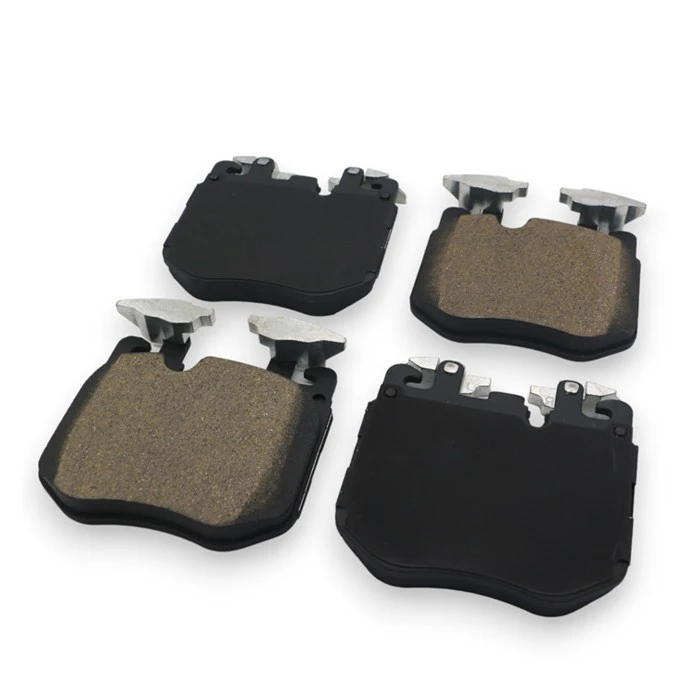

So, there you have it, a rundown of how car brake pads work in an ABS system. I hope this has given you a better understanding of this important aspect of your car's safety. If you're looking for high - quality brake pads, whether it's Slotted Brake Pads, Motorcraft Front Brake Pads, or Car Rear Brake Pads, we've got you covered.
If you're interested in purchasing our brake pads or have any questions about them, don't hesitate to reach out. We're here to help you make the right choice for your car. Let's work together to keep your car braking safely and efficiently.
References:
- Automotive Braking Systems: Principles and Diagnosis by James D. Halderman
- Modern Automotive Technology by James E. Duffy