

As a brake lining supplier, I often get asked a bunch of questions about brake components. One question that pops up quite frequently is, "Can a harder brake lining cause more wear on the brake drum or rotor?" It's a valid concern, and let's dive into this topic to understand what's really going on.
First off, let's understand the basic principle of how brakes work. When you press the brake pedal, the brake lining comes into contact with the brake drum or rotor. This friction between the lining and the drum/rotor is what slows down or stops the vehicle. The brake lining is a crucial part of this equation, as it's the material that does the actual "braking" work.
Now, let's talk about hard and soft brake linings. Hard brake linings are made of materials that are more rigid and less likely to wear down quickly themselves. They can handle higher temperatures and are often used in applications where heavy braking is required, like in Heavy Truck Brake Linings. These linings are designed to resist heat fade, which means they maintain their braking performance even when they get very hot.
On the other hand, soft brake linings are more flexible and provide a quieter and smoother braking experience. They're commonly used in passenger cars where noise reduction and comfort are important. Soft linings conform better to the surface of the drum or rotor, which can lead to more even braking force distribution.

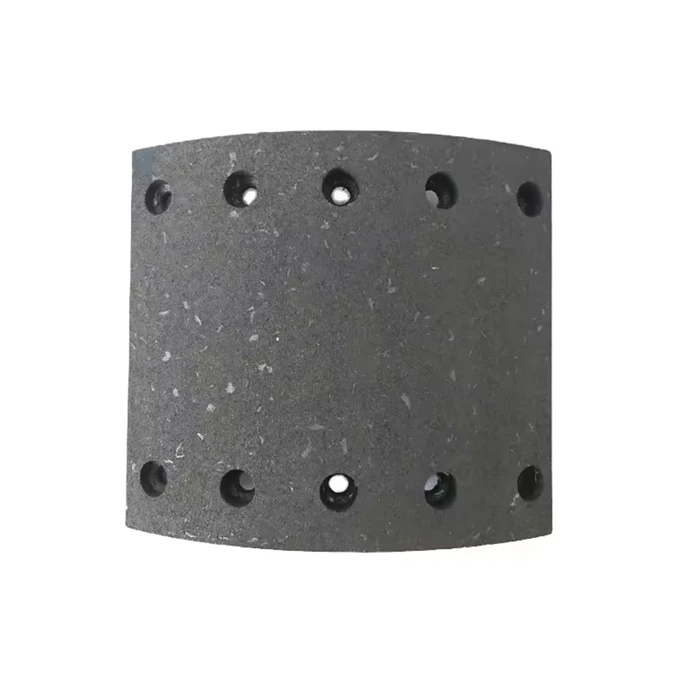
So, back to the main question: can a harder brake lining cause more wear on the brake drum or rotor? The short answer is it can, but it depends on several factors.
One of the key factors is the hardness difference between the brake lining and the drum/rotor. If the brake lining is significantly harder than the drum or rotor, it can act like an abrasive. Just like sandpaper wears down a wooden surface, a hard brake lining can gradually wear away the surface of the drum or rotor. This is especially true if the drum or rotor is made of a relatively soft material.
However, modern brake systems are designed to handle a certain amount of hardness variation. Manufacturers carefully select the materials for both the brake lining and the drum/rotor to ensure they work well together. For example, in some high - performance vehicles, the brake rotors are made of a harder, more heat - resistant material to withstand the high - pressure and high - temperature braking conditions that come with harder brake linings.
Another factor is the driving conditions. If you're constantly doing heavy braking, like in stop - and - go city traffic or driving a heavily loaded vehicle, a hard brake lining might cause more wear on the drum or rotor. The continuous high - force contact can accelerate the wear process. On the other hand, if you do mostly highway driving with gentle braking, the wear might be less noticeable.
The quality of the brake lining also plays a big role. A high - quality hard brake lining is engineered to minimize wear on the drum or rotor. It's formulated with the right combination of materials to provide good braking performance while reducing the abrasive effect. At our company, we take great pride in manufacturing Brake Lining Set that are designed to balance braking power and durability, without causing excessive wear on the mating components.
When it comes to the front brakes, they usually do the majority of the braking work. Front Brake Lining are often subject to more stress and heat than the rear ones. If you choose a hard front brake lining, it's even more important to consider the potential wear on the front brake rotors. Make sure the rotors are up to the task and that the lining is of high quality.
Now, how can you tell if your brake lining is causing too much wear on the drum or rotor? There are a few signs to look out for. One is strange noises when you brake. If you hear a screeching or grinding sound, it could indicate that the brake lining is wearing down the drum or rotor unevenly. Another sign is reduced braking performance. If you notice that your vehicle takes longer to stop or if the brake pedal feels spongy, it could be a sign of excessive wear.
Regular inspection of your brake system is essential. You should check the thickness of the brake lining, the condition of the drum or rotor, and look for any signs of uneven wear or damage. If you're not comfortable doing this yourself, it's a good idea to take your vehicle to a professional mechanic.
In conclusion, a harder brake lining can cause more wear on the brake drum or rotor, but it's not a foregone conclusion. By choosing high - quality brake linings, considering the driving conditions, and ensuring that the drum or rotor is compatible with the lining, you can minimize the risk of excessive wear.
If you're in the market for brake linings, whether it's Front Brake Lining, Brake Lining Set, or Heavy Truck Brake Linings, we're here to help. We offer a wide range of brake lining products that are designed to meet the needs of different vehicles and driving conditions. If you have any questions or want to discuss your specific requirements, don't hesitate to reach out. We'd love to have a chat with you about how we can provide the right brake solutions for you.
References
- Automobile Brake Systems Handbook
- Journal of Automotive Engineering Research on Brake Components Wear