

Hey there, fellow autocross enthusiasts! As a supplier of autocross brake pads, I've had my fair share of conversations about the differences between brake pads for front - wheel drive (FWD) and rear - wheel drive (RWD) cars. It's a topic that comes up quite often, and there are some key distinctions that every racer and car owner should know.
Let's start by understanding the basic differences between FWD and RWD cars. In a front - wheel drive vehicle, the front wheels are responsible for both steering and transmitting power to the road. This means that during acceleration, braking, and cornering, a significant amount of the vehicle's weight shifts to the front. On the other hand, rear - wheel drive cars have the power sent to the rear wheels, which can lead to a more balanced weight distribution under normal driving conditions, but also different weight transfer characteristics during braking and acceleration.
When it comes to braking, these weight transfer differences have a big impact on how the brake pads work. In FWD cars, the front brakes do most of the heavy lifting. During braking, up to 70 - 80% of the vehicle's weight shifts forward onto the front wheels. This places a huge amount of stress on the front brake pads. They need to be able to handle high levels of friction and heat quickly and efficiently.
For us as a brake pad supplier, we design front brake pads for FWD cars to have a high coefficient of friction. This means they can grip the brake rotors tightly and slow down the vehicle effectively. These pads also need to be heat - resistant. When you're slamming on the brakes in an autocross event, the front brake pads can get extremely hot. If they aren't heat - resistant, they can experience something called brake fade, where the braking performance decreases as the temperature rises.
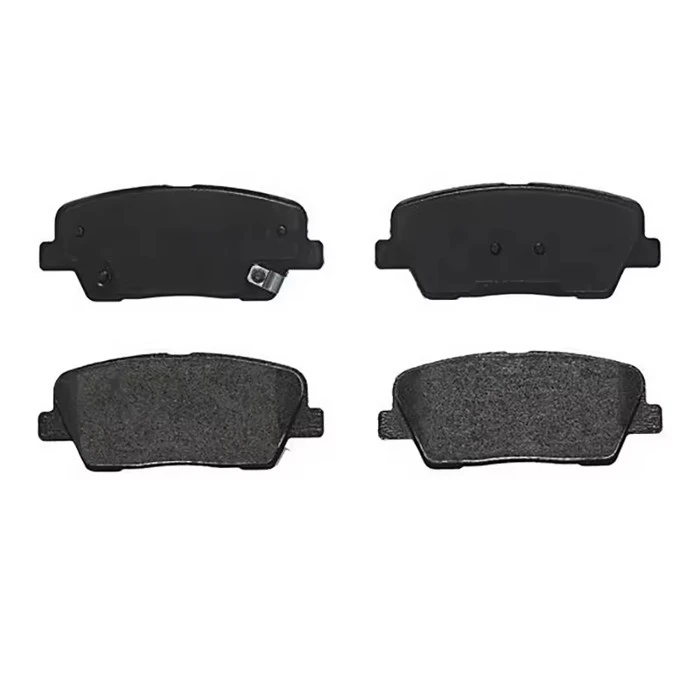

We offer Noise - reducing Brake Pads that are great for FWD cars. These pads are designed to minimize the noise that can sometimes occur when the brakes are applied. In an FWD car, with the front brakes working so hard, noise can be a real annoyance. Our noise - reducing pads use special materials and construction techniques to keep things quiet while still providing excellent braking performance.
Now, let's talk about the rear brake pads in FWD cars. Since the front brakes do most of the braking, the rear brake pads don't have to work as hard. They mainly help with stability during braking and support the overall braking system. They typically have a lower coefficient of friction compared to the front pads. We also offer Less Metal Brake Pads for the rear of FWD cars. These pads are made with less metal content, which can reduce wear on the brake rotors and also be a bit more gentle on the braking system.
Moving on to RWD cars, the weight transfer is a bit more evenly distributed between the front and rear wheels during braking. However, during acceleration, the weight shifts to the rear, which gives the rear wheels better traction. This affects how the brake pads are used.
The front brake pads on RWD cars still do a significant amount of braking, but not to the same extent as in FWD cars. They need to be able to work well in conjunction with the rear brakes to provide a balanced braking performance. We supply Carbon Metallic Disc Brake Pads for the front of RWD cars. These pads are a great choice because they combine the high - performance characteristics of carbon with the durability of metal. They can handle the heat generated during braking and provide consistent stopping power.
The rear brake pads on RWD cars are also important. They need to work in harmony with the front brakes to ensure smooth and controlled braking. Since the rear wheels have more traction during acceleration in RWD cars, the rear brake pads can contribute more to the overall braking force compared to FWD cars. Our brake pads for the rear of RWD cars are designed to have a good balance of friction and heat resistance, so they can work effectively without over - or under - braking.
Another factor to consider is the driving style in autocross. Whether you're driving a FWD or RWD car, aggressive driving will put more stress on the brake pads. In autocross, you're constantly accelerating, braking, and cornering at high speeds. This means that the brake pads need to be able to handle rapid changes in temperature and friction.
For FWD cars, if you have a more aggressive driving style, you might want to consider upgrading your front brake pads to a higher - performance option. Our high - performance front brake pads for FWD cars are designed to withstand the intense heat and friction generated by hard braking. They can give you that extra edge in an autocross event.
In RWD cars, a more aggressive driving style might require you to pay attention to both the front and rear brake pads. Since the weight transfer is more dynamic in RWD cars, both sets of brake pads need to be in top condition to provide optimal braking performance.
So, to sum it up, there are definitely differences in autocross brake pads for front - wheel and rear - wheel drive cars. FWD cars rely heavily on the front brake pads, which need to be high - friction and heat - resistant. The rear brake pads in FWD cars are more for stability. RWD cars have a more balanced braking load between the front and rear, but both sets of brake pads need to work together for optimal performance.
If you're an autocross racer or just a car enthusiast looking to upgrade your brake pads, we're here to help. We've got a wide range of brake pads designed specifically for FWD and RWD cars. Whether you need noise - reducing pads, less - metal pads, or high - performance carbon metallic pads, we've got you covered.
If you're interested in learning more about our products or want to start a conversation about purchasing our autocross brake pads, don't hesitate to reach out. We're always happy to chat with you and help you find the perfect brake pads for your car.
References
- "Automotive Braking Systems" by John C. Dixon
- "High - Performance Brake Systems" by Tony Candela